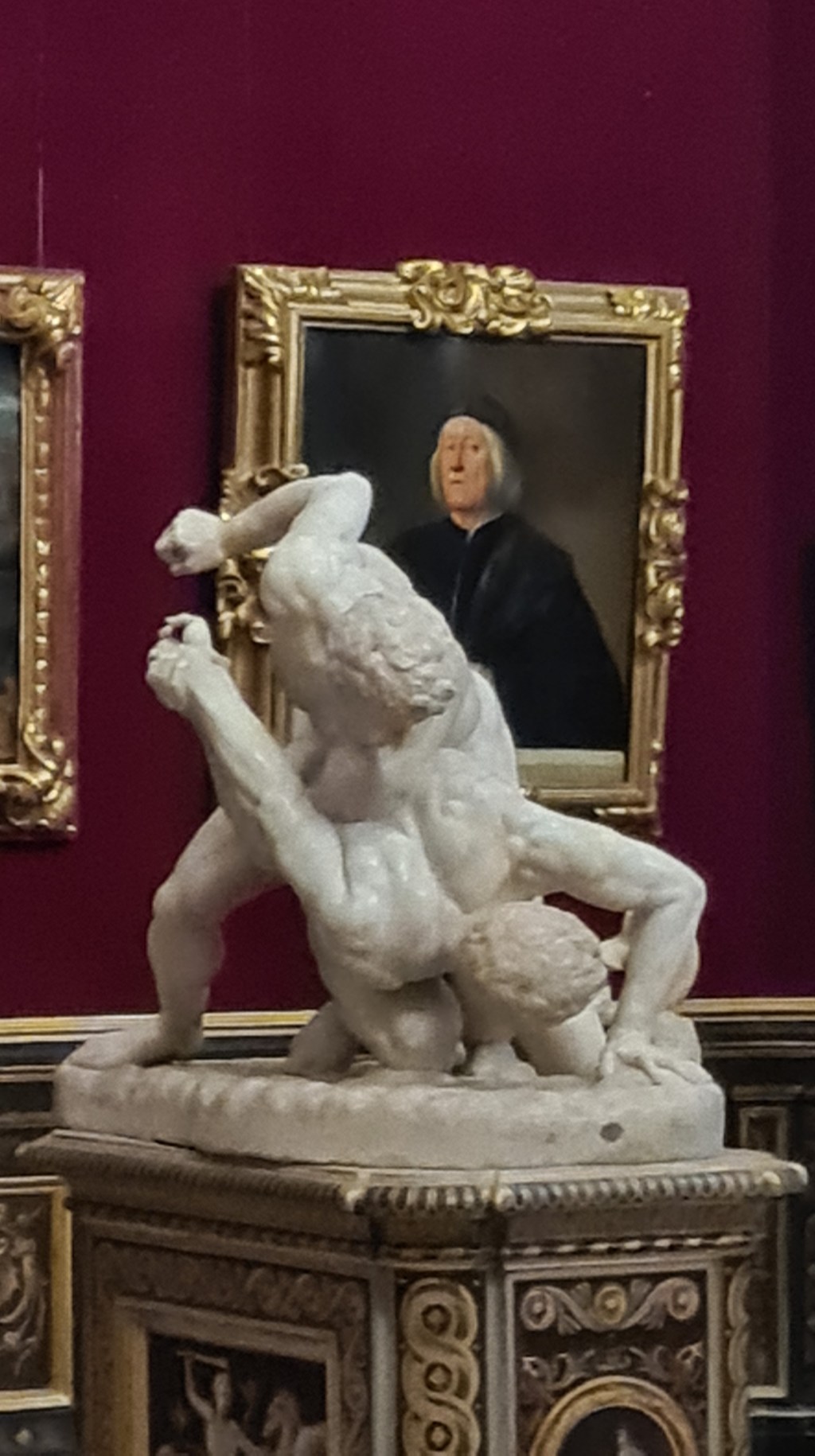
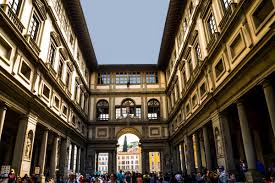
It is one of the oldest, largest and most visited galleries in the world and more than 2 million people visit every year. It was built in u-shaped structure near the Arno River, commissioned by Cosimo de Medici and designed by Vasari. It took more than 20 years to build. In addition to the master paintings of Michelangelo, Da Vinci, Botticelli, Titian, Rembrandt, Raphael, Caravaccio, Rubens, it is full of dozens of works and sculptures from the ancient Greek period. The ceiling decoration of Uffiizi is also magnificent. It took 4 hours of us to visit the gallery. After a while, your perception weakens, you get tired, and as the gallery starts to get crowded, the queues in front of the works get longer. The cafeteria in the museum is a good option to catch your breath. It is best to go in the morning during the opening. If you are not professionally interested in art or as hobby, most of the time, you may not understand what tells a painting, sculpture or architecture, and naturally, you may have difficulty of enjoying it. Taking a guided tour or an audio guide while visiting the galleries will make you better understand the paintings and increase your joy more, but it will also require an additional cost. In this article, you will find brief information about some important works which will make your job easier. I wish to contribute a small help to your visit to Uffizi.
Michelangelo Merisi da Caravaggio: Italian baroque painter who lived between 1571-1610. He applied light and shadow very successfully in his works. He is an artist who made a difference by depicting religious and mythological scenes with ordinary human figures.
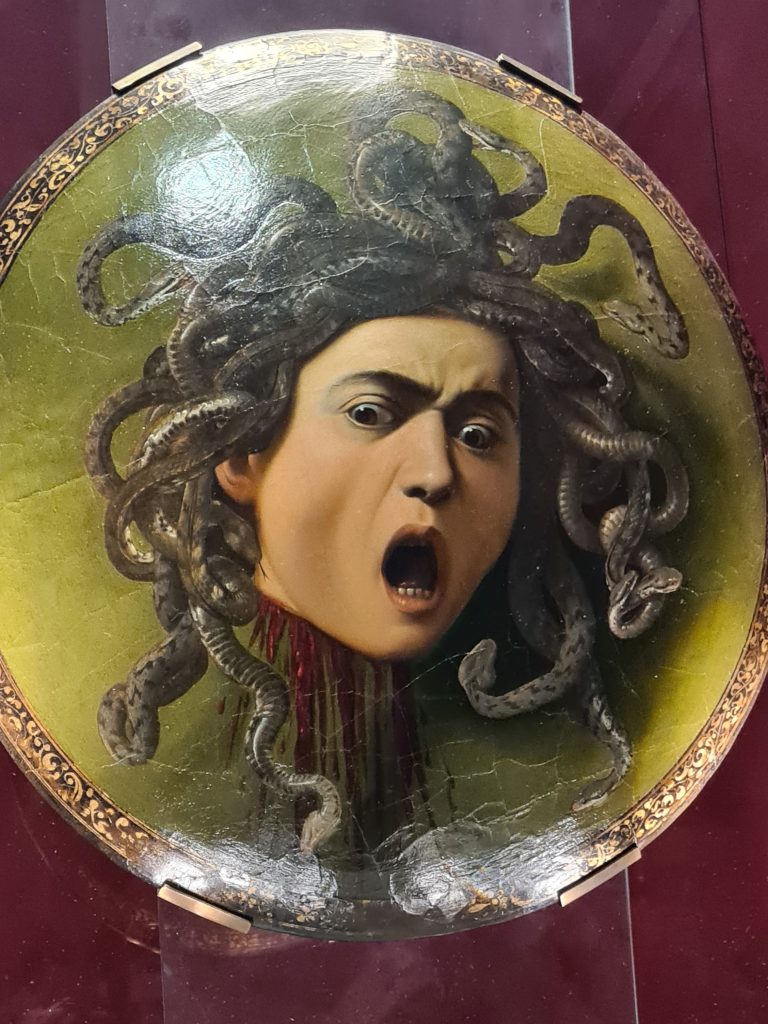
Medusa: One of the most important works in the gallery. The painting depicts the killing of the gorgon Medusa by the demigod Perseus. (Gorgons are terrifying female monsters with snake heads from Greek mythology.) Medusa turns those who look into her eyes into stone. Medusa has 2 other sisters. They do not have the ability to turn those who look into stone, but they have the ability to be immortal. Medusa thinks she is also immortal. While Perseus is on his way to kill Medusa, he encounters Athena and Athena warns him not to look into Medusa’s eyes and gives him a shield for protection. Caravaggio’s Medusa includes the moment when Perseus kills Medusa and the reflection of Medusa on the shield. The fear and surprise expression on Medusa’s face has been successfully conveyed. The artist used himself as a model in the work. 1st floor, room 90
Bacchus : In Greek mythology, Dionysus is the god of wine and fertility. He is known as Bacchus in Rome. Caravaggio has two Bacchus paintings, the one called “Sick Bacchus” is exhibited in the Galleria Borghese in Rome. In this one in Uffizi, Caravaggio depicts Bacchus as young and healthy. He used his friend Marrio Mitti as a model for Bacchus. In the painting, Bacchus has grapes and vines leafs on his head, he is lying on the bed and has a wine glass in his left hand. Caravaggio has depicted the god Bacchus in a humanized way. Bacchus is holding the wine glass as if he is going to offer it. The fruits in the basket are too ripe and some have started to root. This is used to describe the transience of worldly life. Caravaggio has reflected his own self-portrait in the wine jug on the table.

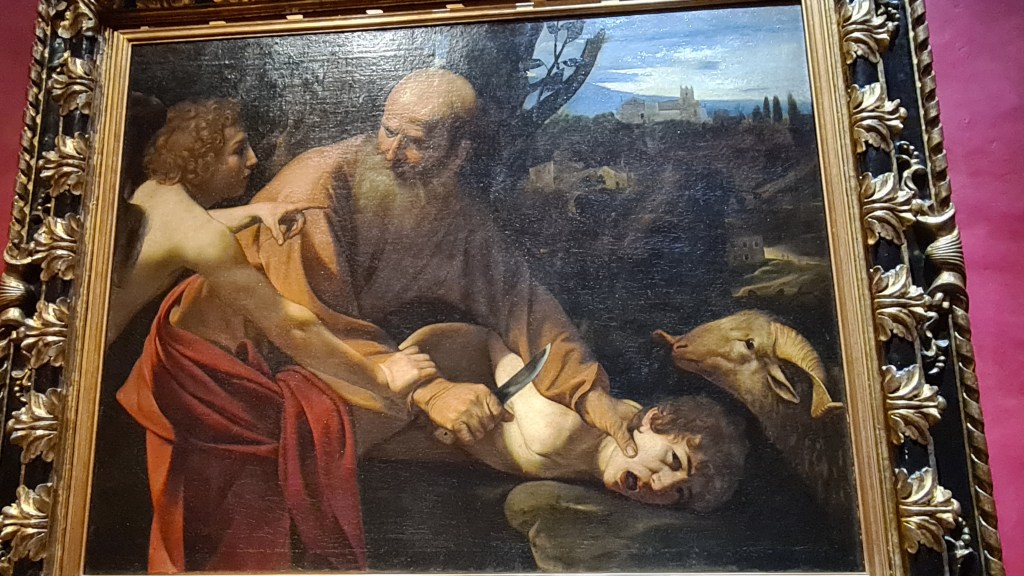
Sacrifice of Isaac – It tells the story of God sending an angel to prevent Abraham from sacrificing his only son Isaac. Giovanni Masaccio: He lived between 1401-1428 and was one of the early artists of the Italian Renaissance movement. He was one of the first painters to introduce the concept of perspective.
Giovanni Masaccio: He was one of the early artists of the Italian Renaissance movement who lived between 1401 and 1428. She was one of the first painters to bring the understanding of perspective.
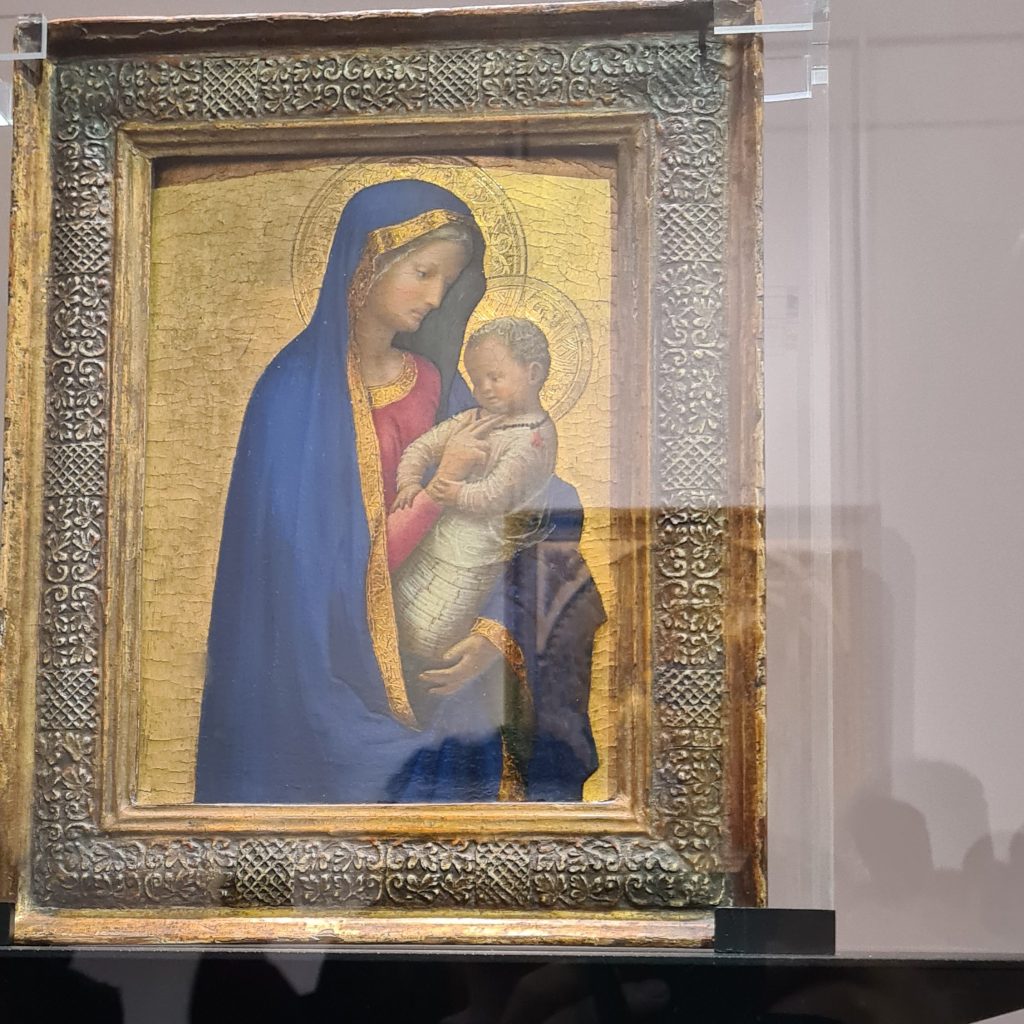
Madonna and Child: Painted in 1426. It was stolen and recovered after the war. Although there is no written document about the painting, it is assumed that it is Masaccio’ ‘s work because of its style. The two-dimensional work depicts Jesus as a joyful child. The halo over the heads of Mary and Jesus is superimposed to provide a sense of depth.
Bartolomeo Manfredi: He was a successful Italian artist who lived between 1582-1622.
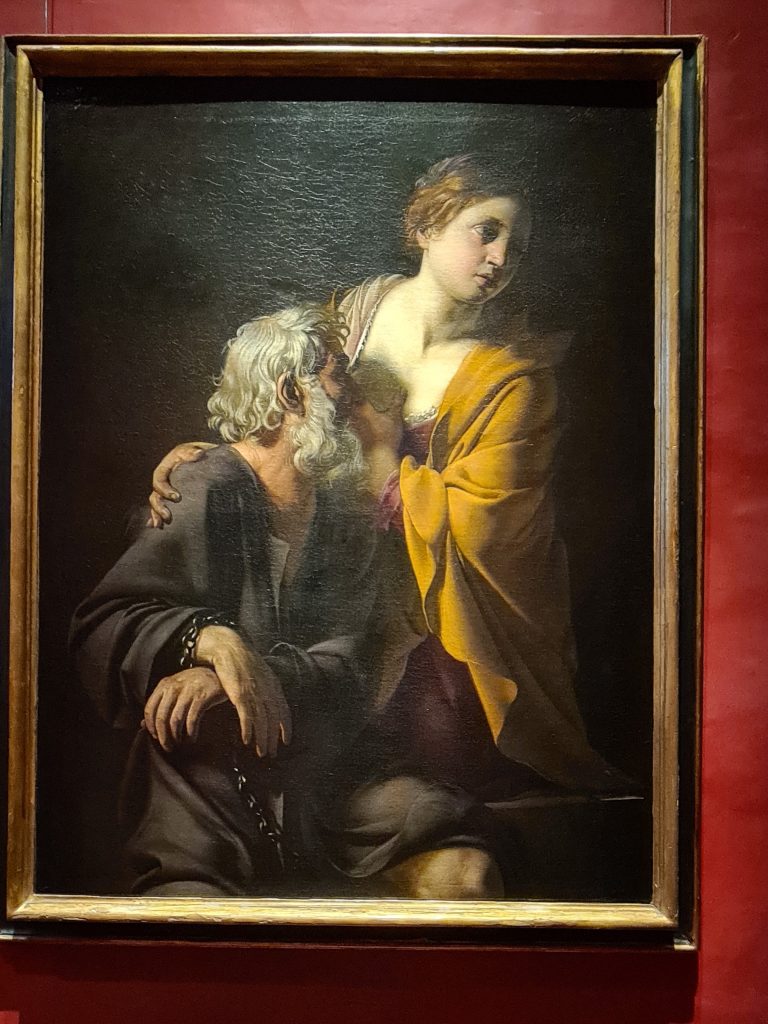
Roman Charity-(Roman philanthropy): The epic of a woman who secretly fed her father, who was sentenced to death by starvation, with her milk in ancient Greece was told. The father’s name was Cimon and the daughter’s name was Pero. Room 91
Filippo Lippi: He lived between 1457-1504. He was the son of the well-known painter Fra’ Lippo Lippi. He was born in Florance and an early Italian Renaissance artist.
St.Jerome: St. Jerome is depicted kneeling in front of the cross. (St. Jerome, or his real name Eusebius Hieronyemus, the person who most successfully translated the Bible into Latin, Bible scholar) He is one of the four great fathers of the Church.

Artemisia Gentileschi: Baroque artist born in Rome, who lived between 1593-1653. She is important in that she was the first female artist to be accepted to the academy in Florence at a time when female painters were not accepted. She is considered one of the most important artists after Caravaggio.
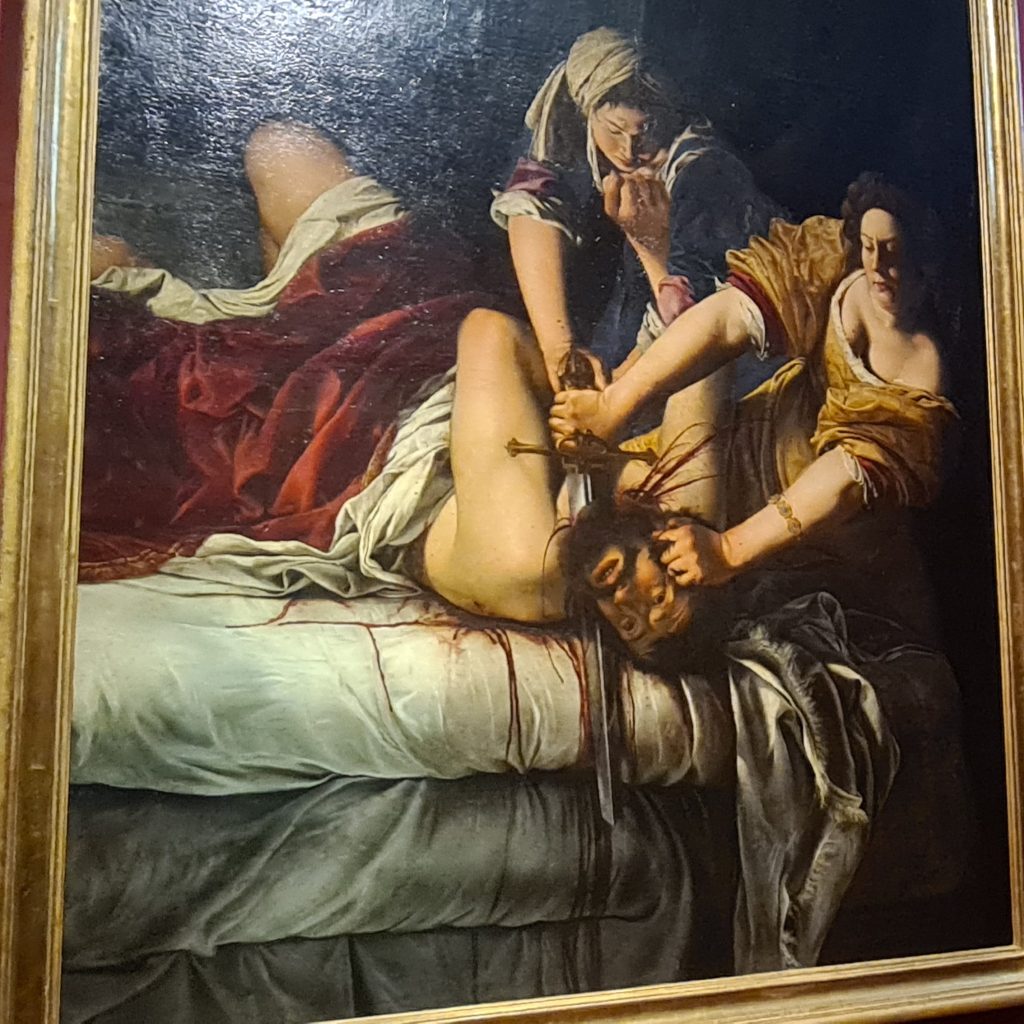
Judith Slaying Holofernos: The subject is about Judith, a Jewish woman, beheading the Assyrian general Holofernes after the invasion of the Jews by the Assyrians and her courage. Judith gets general Holofernes drunk and seduces him in order to protect her people from the Assyrians and then beheads him.
Leonardo da Vinci: A Renaissance artist born in Florence, who lived between 1452-1519. In addition to painting, he was an architect, engineer and scientist.
Annunciation: The work, begun by his master Andrea del Verrocchio and mostly completed by Da Vinci between 1472-1476, depicts the announcement of Jesus’ coming to his mother, Mary. In the painting, Mary, a pious and virgin woman, is sitting and reading the Old Testament, the holy book on the table. Suddenly Gabriel appears in front of her and gives her the good news that Jesus will come. Mary’s left hand is raised in the air in surprise. The lily in Gabriel’s hand represents Mary’s purity and untouchedness.

The Baptism of Christ: This wooden painting made by Da Vinci and his master Andrea del Verrocchio in 1472. Jesus and John the Baptist are depicted as being baptized by John the Baptist on the banks of the Jordan River according to the Bible. The arms of God are painted with golden rays and a white dove, which represents the holy spirit in Christianity, is located at the top of the painting with its wings outstretched. There are two angel figures holding his clothes next to Jesus. The one on the left was painted by Da Vinci, the one closer to Jesus was painted by Verrocchio, and it is said that Verroccio found Da Vinci’s angel more beautiful.

Adoration of the Magi: In Leonardo’s unfinished work, Mary and the baby Jesus in the middle are surrounded by men who look at them in admiration in a semicircle.

Michelangelo di Lodovico Buonarroti Simoni: He was a sculptor, architect and painter who lived between 1475-1564. The Holy Family is the only painting on panel by Michelangelo, who was originally a sculptor.
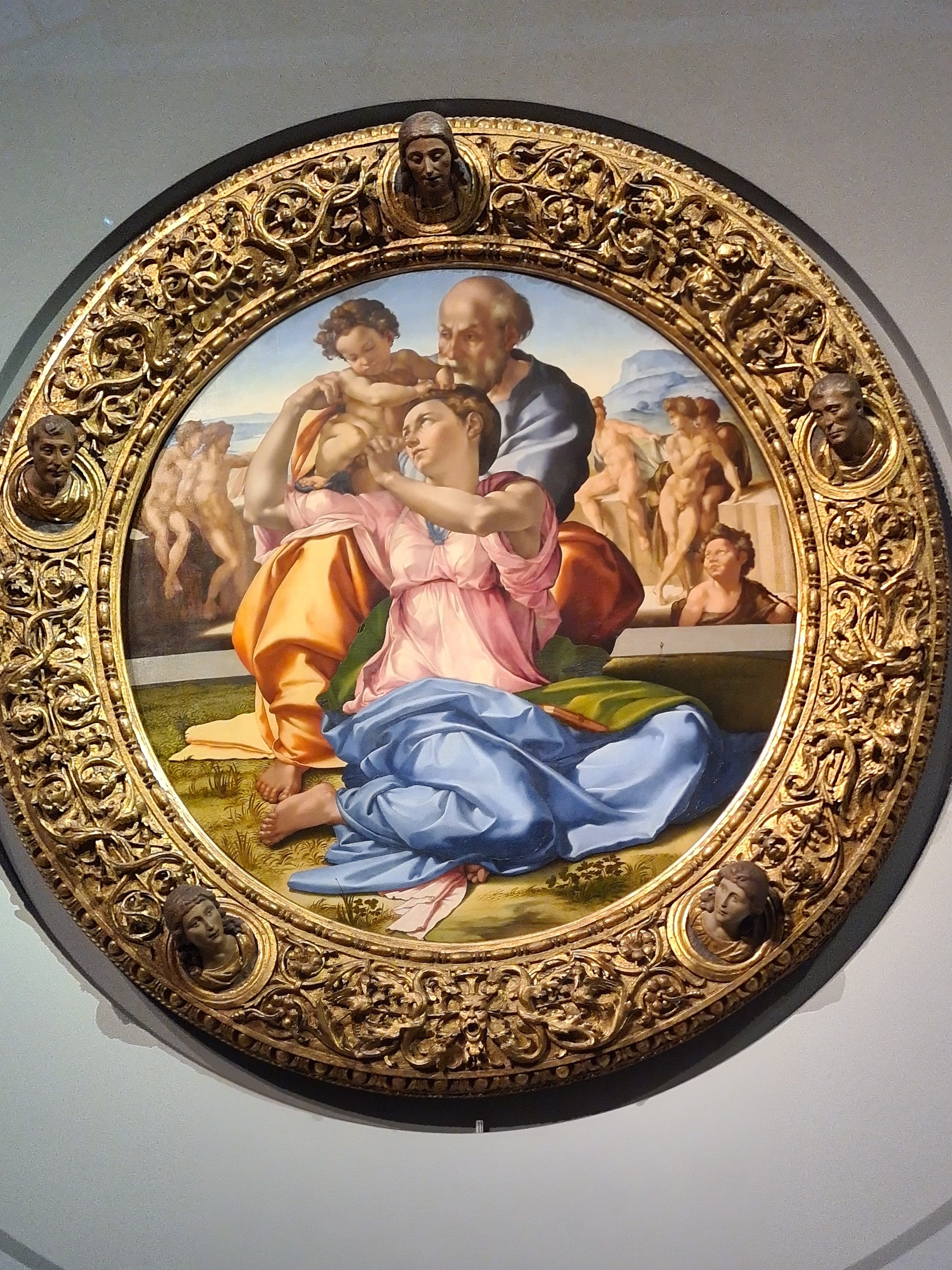
Holy Family with St. John the Baptist: The 1506 work features the child Jesus, Mary, Joseph, and a figure that is assumed to be John the Baptist and resembles the child Jesus, along with naked male figures in the background. It is also known as the Doni Tondo, inspired by the name of Agnoli Doni, who commissioned the tondo, meaning round-circle. Second floor, 35th hall
Sandro Boticelli: He was an important Renaissance artist born in Florence and lived between 1445-1510.
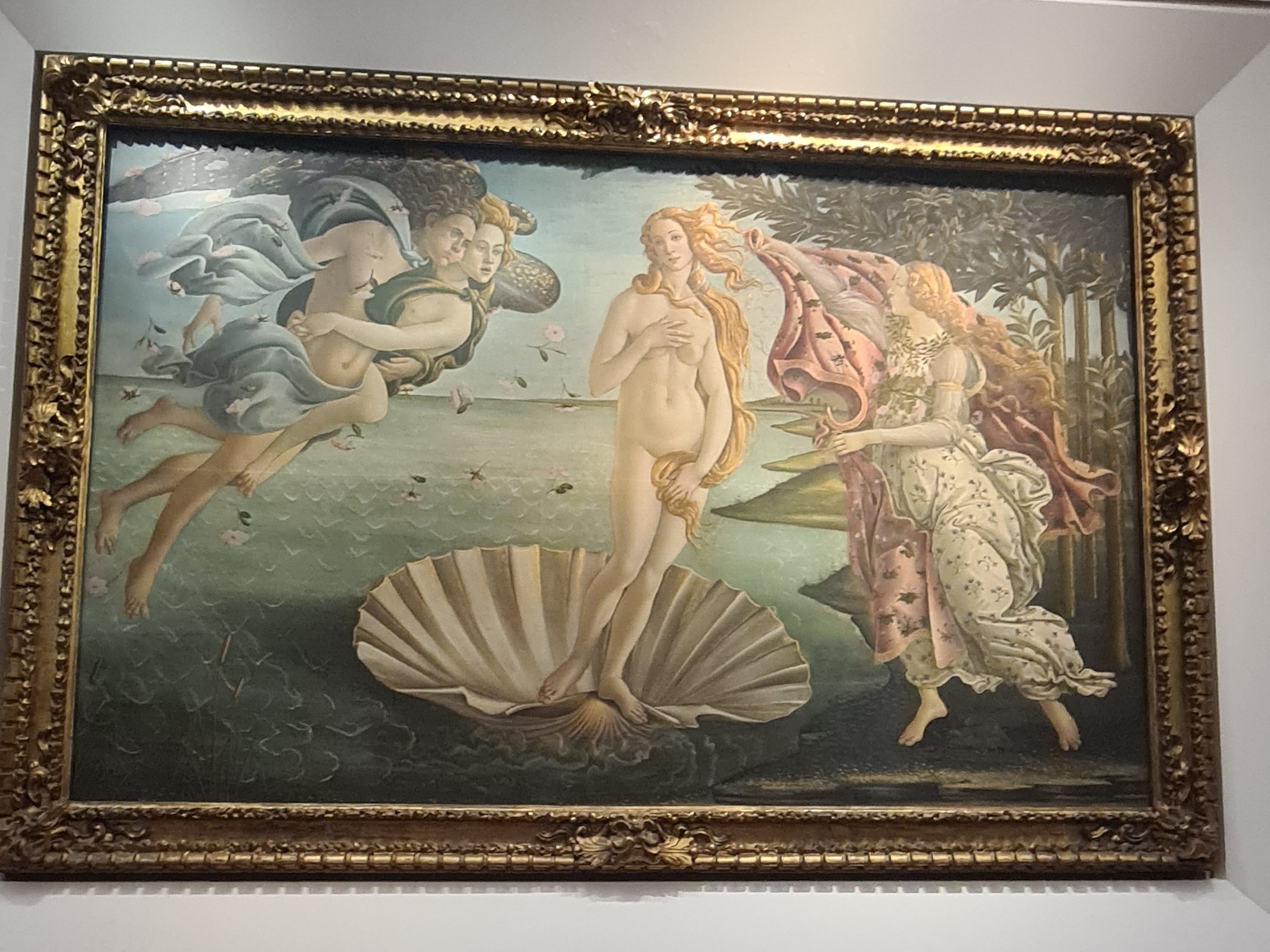
The Birth of Venus : This painting, made between 1482-1486, depicts the moment when Venus, the goddess of love and beauty in Roman mythology (Aphrodite in Greek mythology), is born from the sea and comes to shore on a seashell. She is born and brings love and beauty to the world. On the left, Zephyr, the god of the west wind, and Chloris, embracing him, blow wind towards Venus, allowing the seashell to travel on the water. Roses, the symbol of Venus, are blown by the wind. Venus hides her private parts with her hands and hair in a moral stance. On the right side of the painting, a Horai (goddess symbolizing the seasons) is depicted running towards Venus to dress her. The fact that the clothes Horai holds are adorned with flowers reflects that they represent spring.
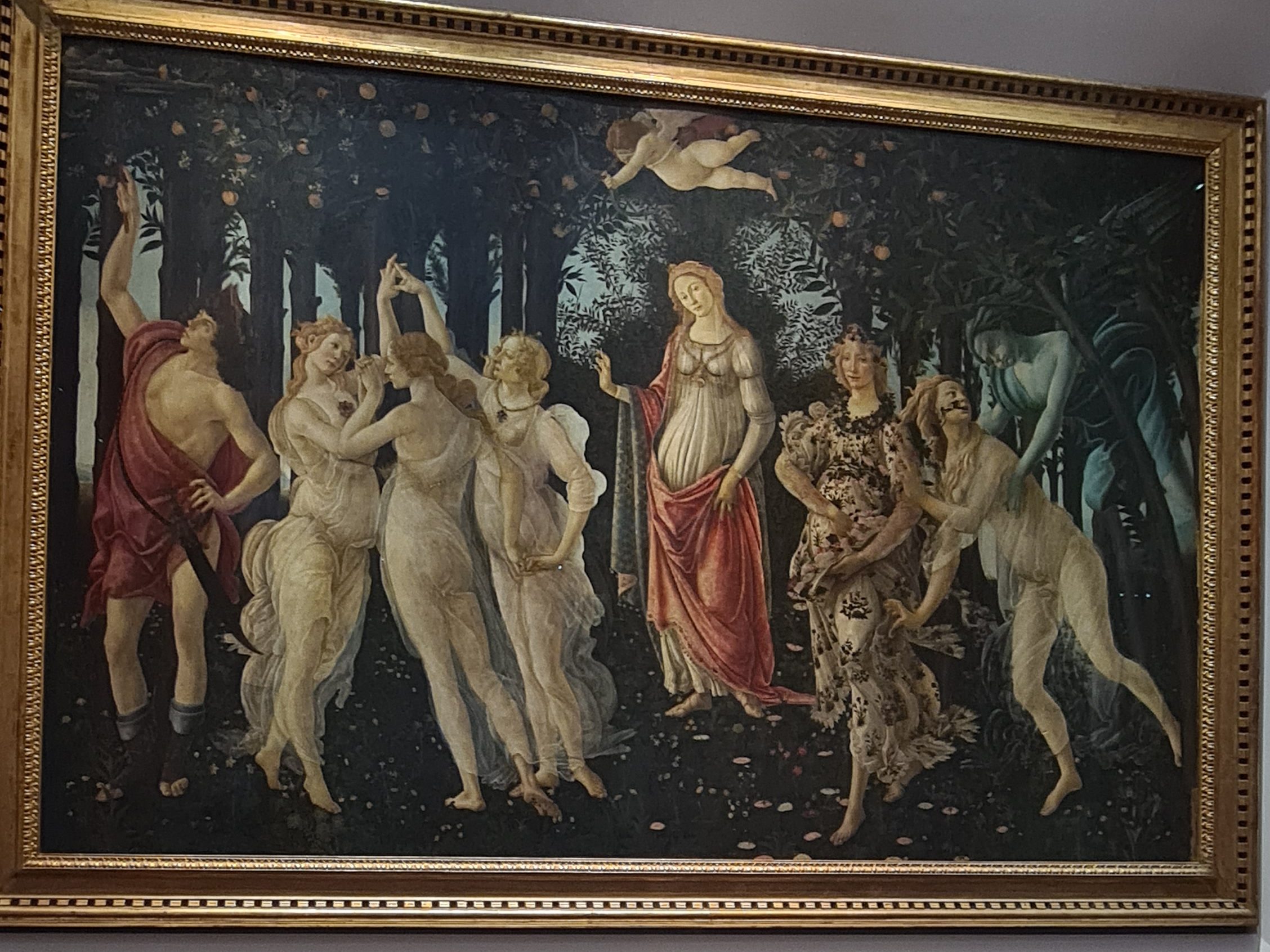
Primavera (Spring): In the work dated 1482, Venus (Aphrodite), the goddess of love and beauty, is at the very center of the painting, with her head bowed and a halo around her head, resembling Mary. In the background are fruit trees and on the ground are flowers, a perfect spring painting. The three beauties known as the Charites (Aglaie, Thalia and Eupherosyne) on the left side of the painting shine with elegance. Botticelli obtained this color by using egg white when painting the fairies’ clothes. The male figure to the left of the fairies is Mercury. Mercury is dispersing the clouds with his snake-headed staff in his hand. The boy figure next to Venus’ head, her son Cupid (Eros), is blindfolded and is aiming his arrow at the three beauties, and is the messenger of a sudden love. The dressed figure on the other side of Venus is the goddess of flowers Flora (Chloris), who is holding the flowers she has collected in her lap. The figure next to Flora also depicts her transformation and capture by Zephyr, the god of the west wind, before transforming into the goddess of flowers. This transformation is depicted as flowers coming out of Flora’s mouth.
Pallas and the Centaur: The woman in the painting is assumed to be Pallas (Athena). The centaur next to her is in a submissive stance. Centaurs are wild, horny and lustful creatures with half-human, half-horse bodies who live in the forest and hunt fairies. The centaur represents the cruel and wild instincts of mankind and uncontrolled lust. The painting depicts the submission of these emotions to virtue and intelligence.

Titian Vecellio : The Venetian artist, also known as Titian, was a well-known and respected artist while he was alive. He is known for his unique brushwork and for obtaining richer colors by softening the colors with his fingers. He is one of the best Venetian artists.
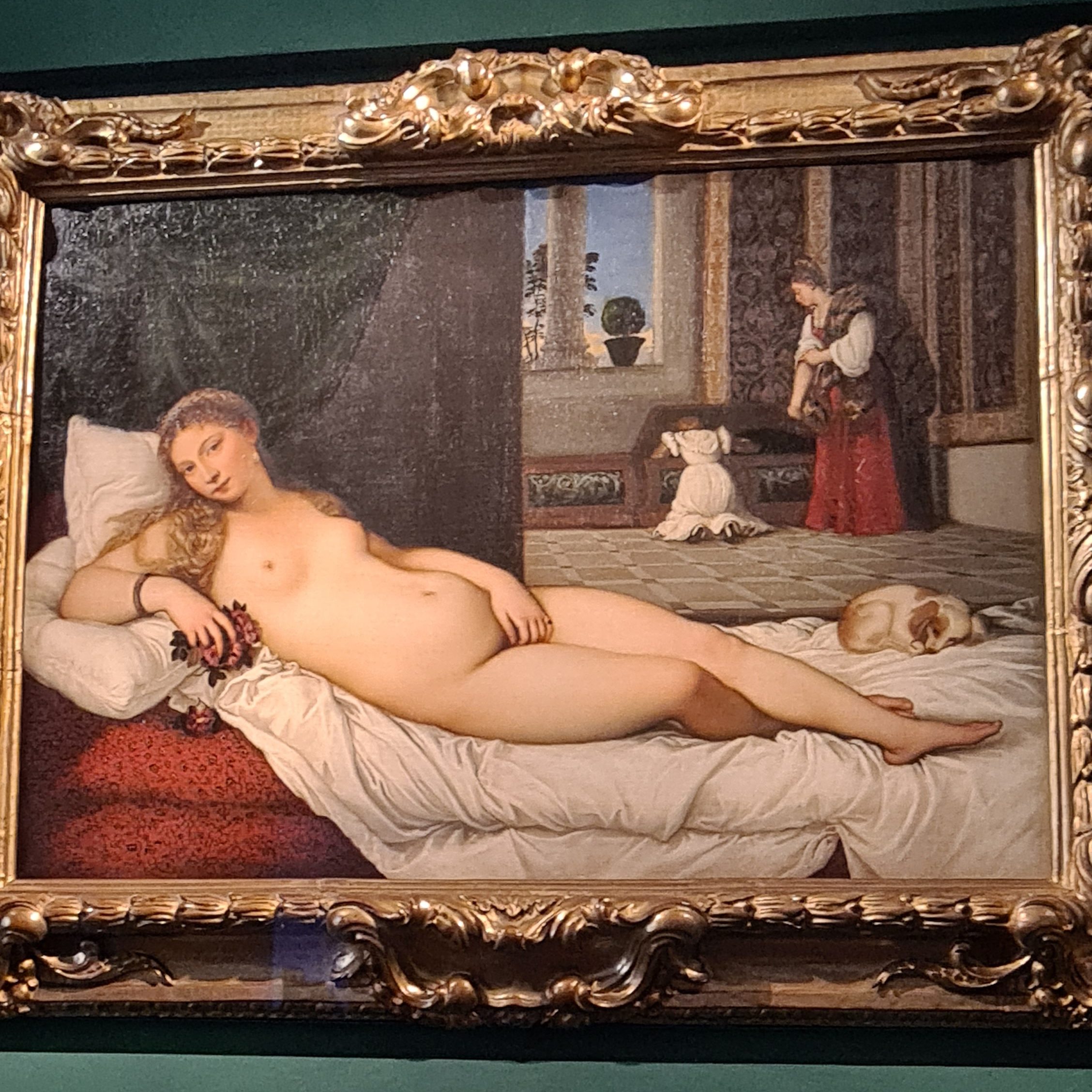
Venus of Urbino: In the 1538 work of the Renaissance artist Titian, Venus is depicted as a seductive woman.
Annibale Carracci: Italian baroque artist born in Bologna in 1560.
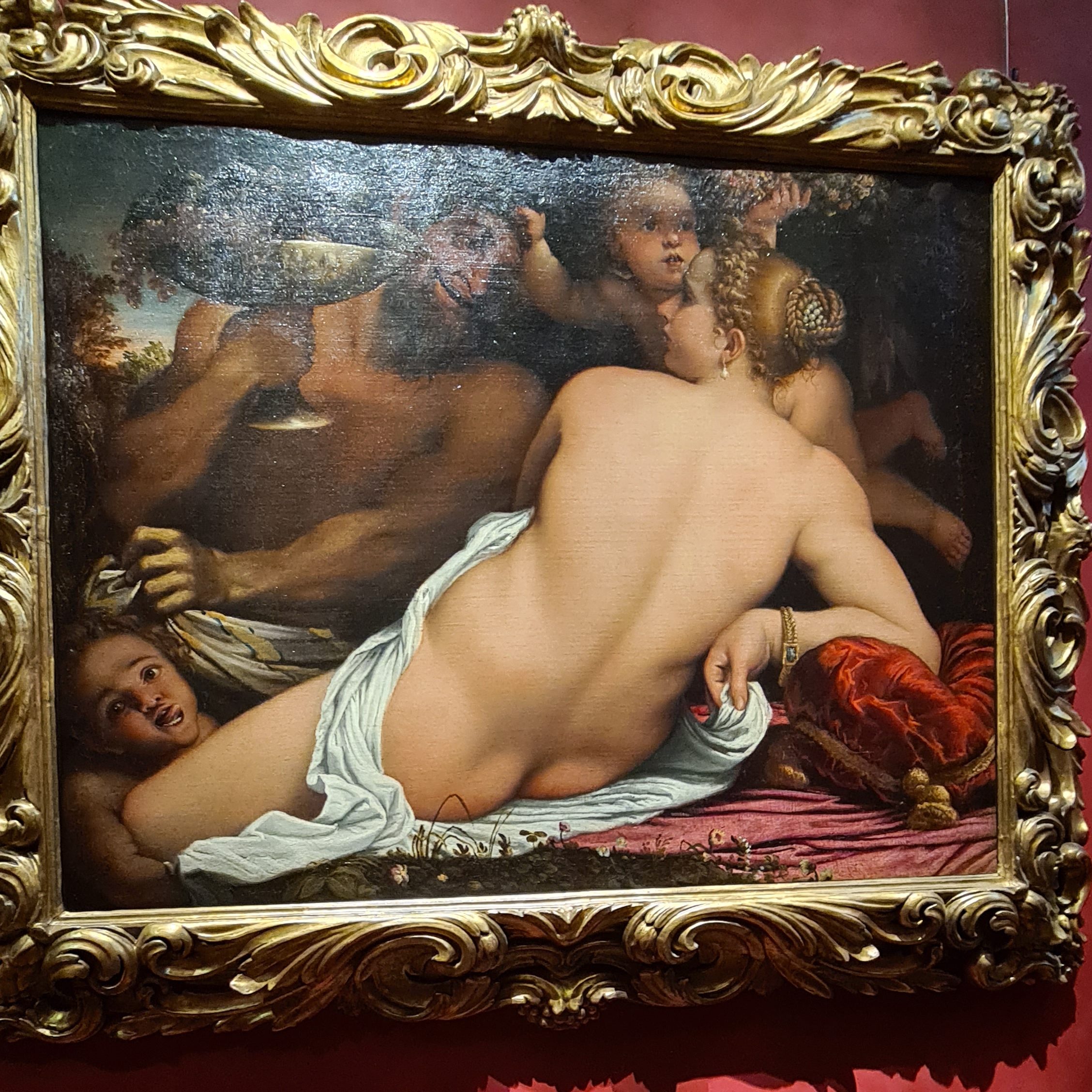
Venus with a Satyry and two Cubids- (La Baccante): In his painting Venus, two satyrs and the god of love are depicted. A satyr is a half-goat, half-human forest creature in Greek mythology. It is known as a faun in Roman mythology. It is human from the waist up and goat from the waist down.
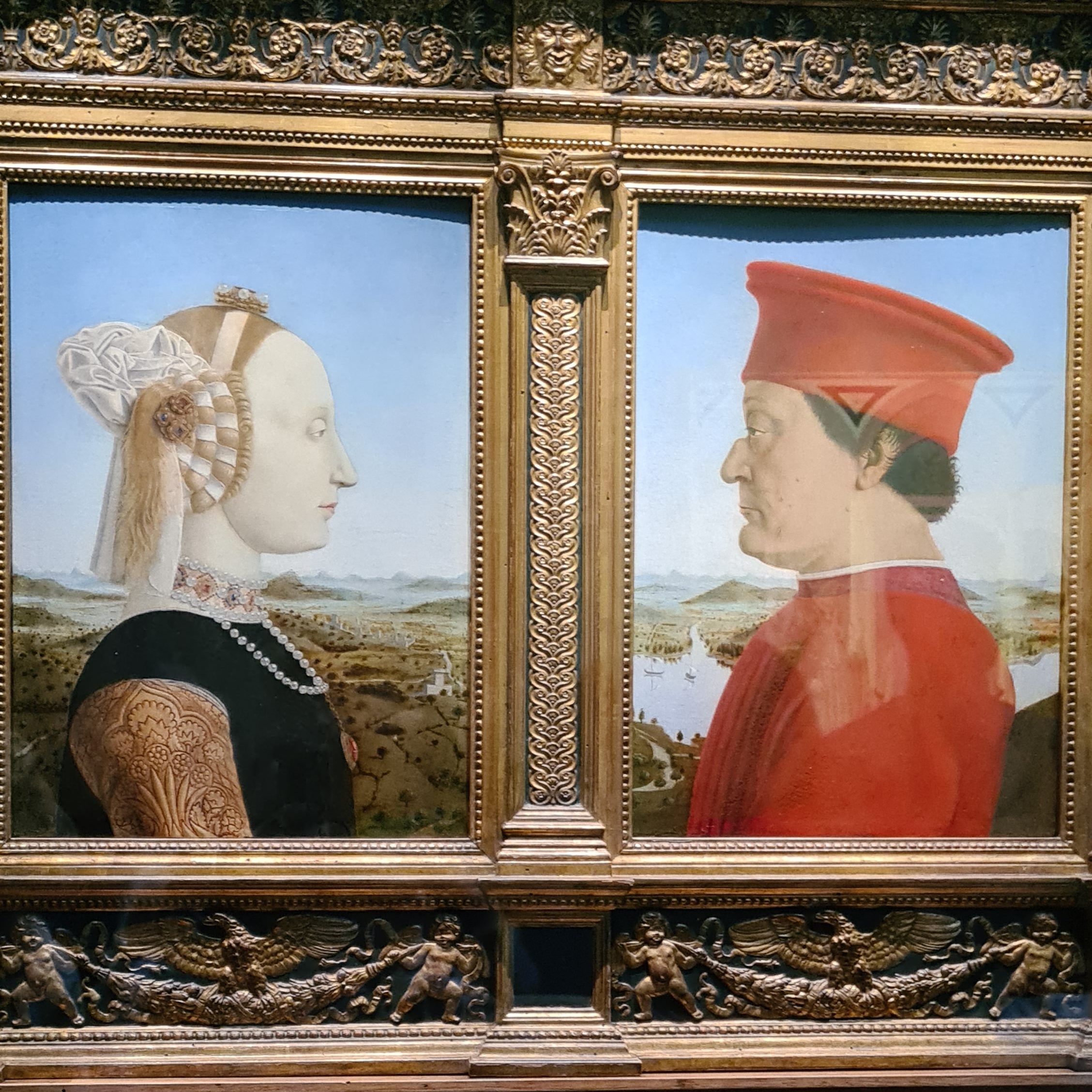
Pierro della Francesca: Italian Renaissance artist. In addition to painting, he was also interested in mathematics, geometry and perspective.
The Duke and Duchess of Urbino: In the painting, the Duke is depicted from the left because of the wound on his right side. His wife, standing opposite him, is also portrayed with her forehead open in accordance with the beauty concept of the period. Second floor, room no. 8.
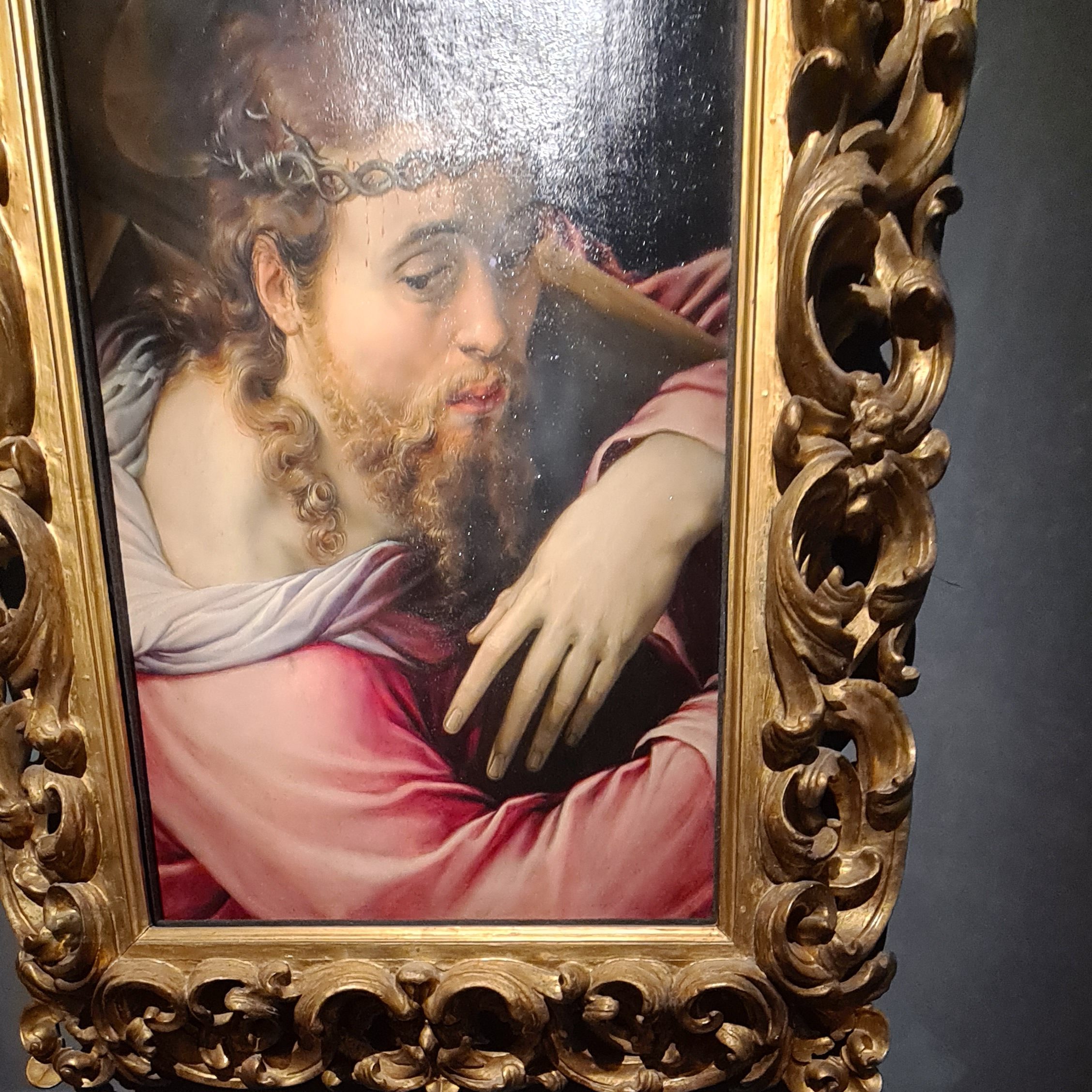
Francesco de Rossi (also known as Artist Salviati): Florentine artist who lived between 1510-1563.
Christ Carrying the Cross: Jesus is walking towards Mount Calvary, the hill outside the borders of Jerusalem where he was crucified, with a cross on his back. This depiction was a very popular scene in the 16th century. The painting focuses on Jesus’ face.
Raffaello Sanzio da Urbino: Italian painter and architect of the Renaissance who lived between 1483-1520. He is known as the trio of the period, along with Leonardo and Michelangelo. Shapes are prominent in his works.
Portraits of Agnolo and Maddalena Doni: The painting of the wealthy merchant and his wife, who belonged to the Florentine noble family Strozzi, can be considered the beginning of the mature period of the artist’s works. Agnolo Doni, who was known to be stingy in his expenses outside of art, had the paintings made while Raphael was in Florence. Maddalena Doni is in a position with her hands on top of each other, similar to the Mona Lisa, but we see that Raphael paid more attention to clothes than Da Vinci. Maddalena Doni’s outfit is simple but confirms her wealth.

Madonna and Child with the Young St. John the Baptist (Madonna of the Goldfinch): The work is also known as the Goldfinch Madonna. Mary, the child Jesus and his peer John the Baptist are together. The child John has a goldfinch in his hand and Jesus wants to touch it. The goldfinch is thought to symbolize the cross. The holy book in Mary’s hand shows her faith. The background of the painting is calm, as in other Raphael paintings, which increases the power of the scene in front. Raphael made the work as a wedding gift for his friend Lorenzo Nasi, but Lorenzo Nasi’s house was destroyed in the earthquake of 1548 and the painting was shattered. After the first restoration, which was unsuccessful, it took its current form in 2002 with a correction that lasted 6 years and has been exhibited in the Uffizi Gallery since 2008.

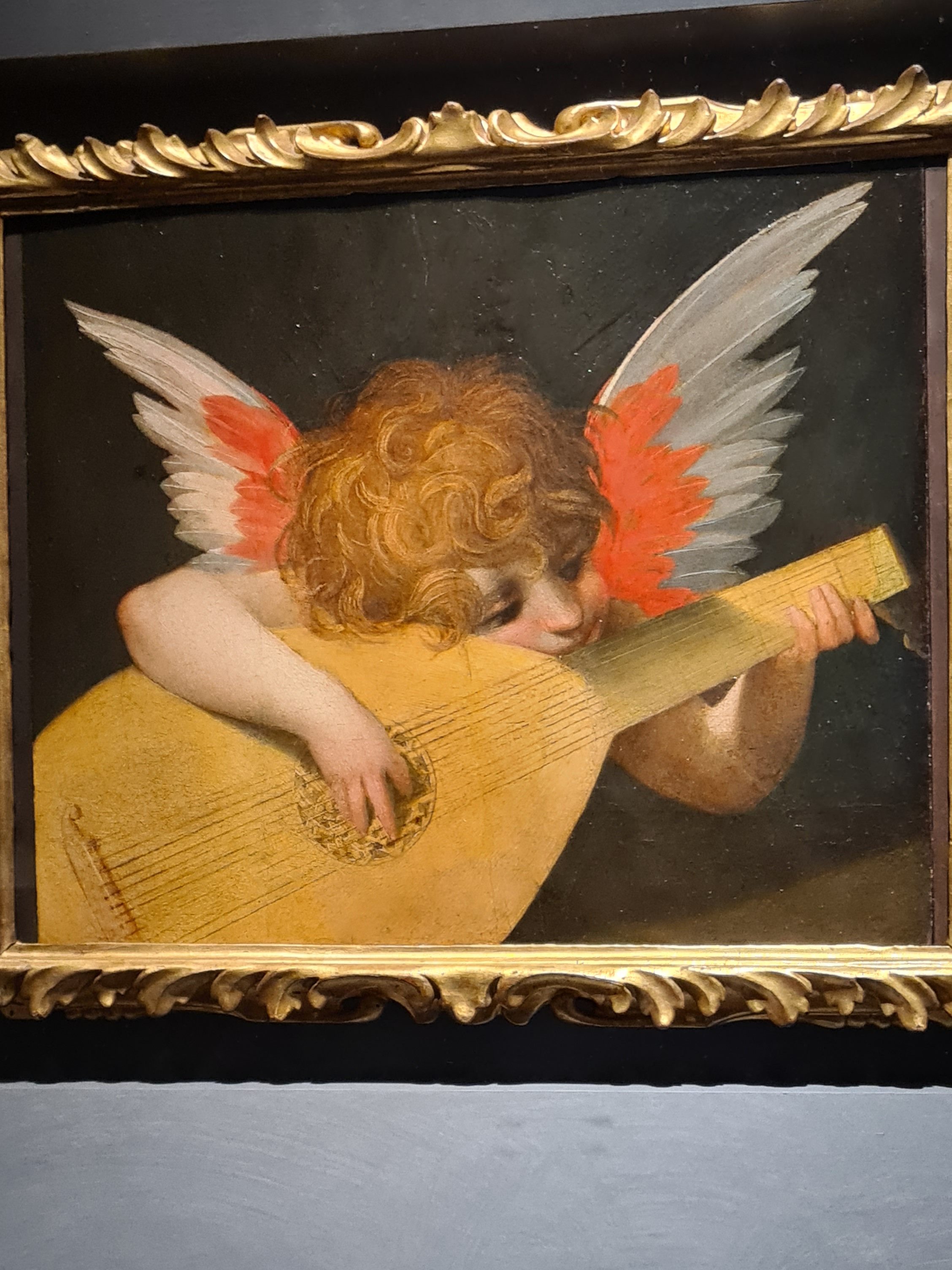
Giovanni Battista di Jocopo (Rosso Fiorentino): He was an artist born in Florence who lived between 1495-1540. Moving figures and is known for his bold use of color. He brought Italian Mannerism to France.
Angel Playing Lute: An angel is seen playing a musical instrument in a painting dated 1521. It is an example of the Mannerist style.
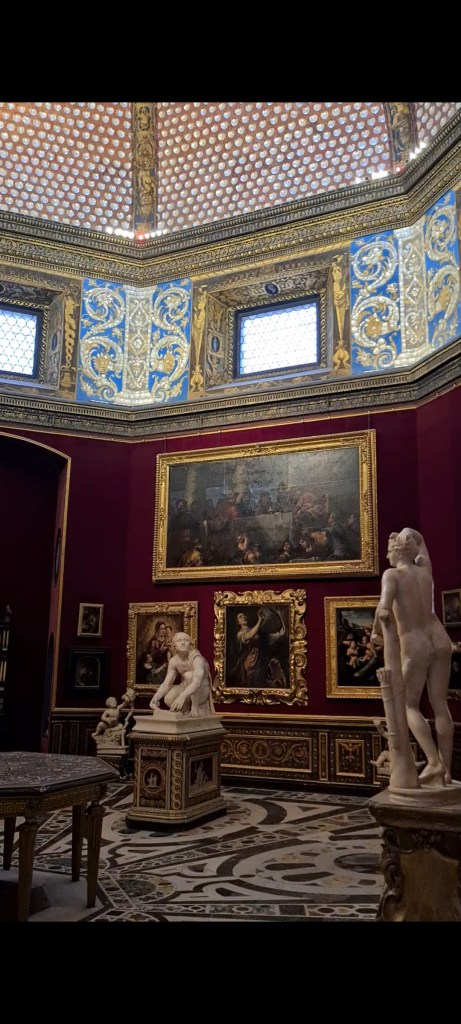
Tribuna Room : The Tribuna room in the Uffizi Gallery is a magnificently beautiful room. You cannot enter it, you can only look inside through the door. The octagonal room was designed by Bernardo Bountalenti in 1584 for Francesco I de Medici. It is full of valuable antiques, paintings and sculptures.
 Gezmek Lazım
“Visiting Uffizi Gallery” için 2 cevap
[…] Caffe Gilli Florence, the capital city of Tuscany Uffizi Gallery, paintings, symbols and stories behind them […]
BeğenBeğen
[…] Caffe Gilli Visiting Uffizi Gallery […]
BeğenBeğen