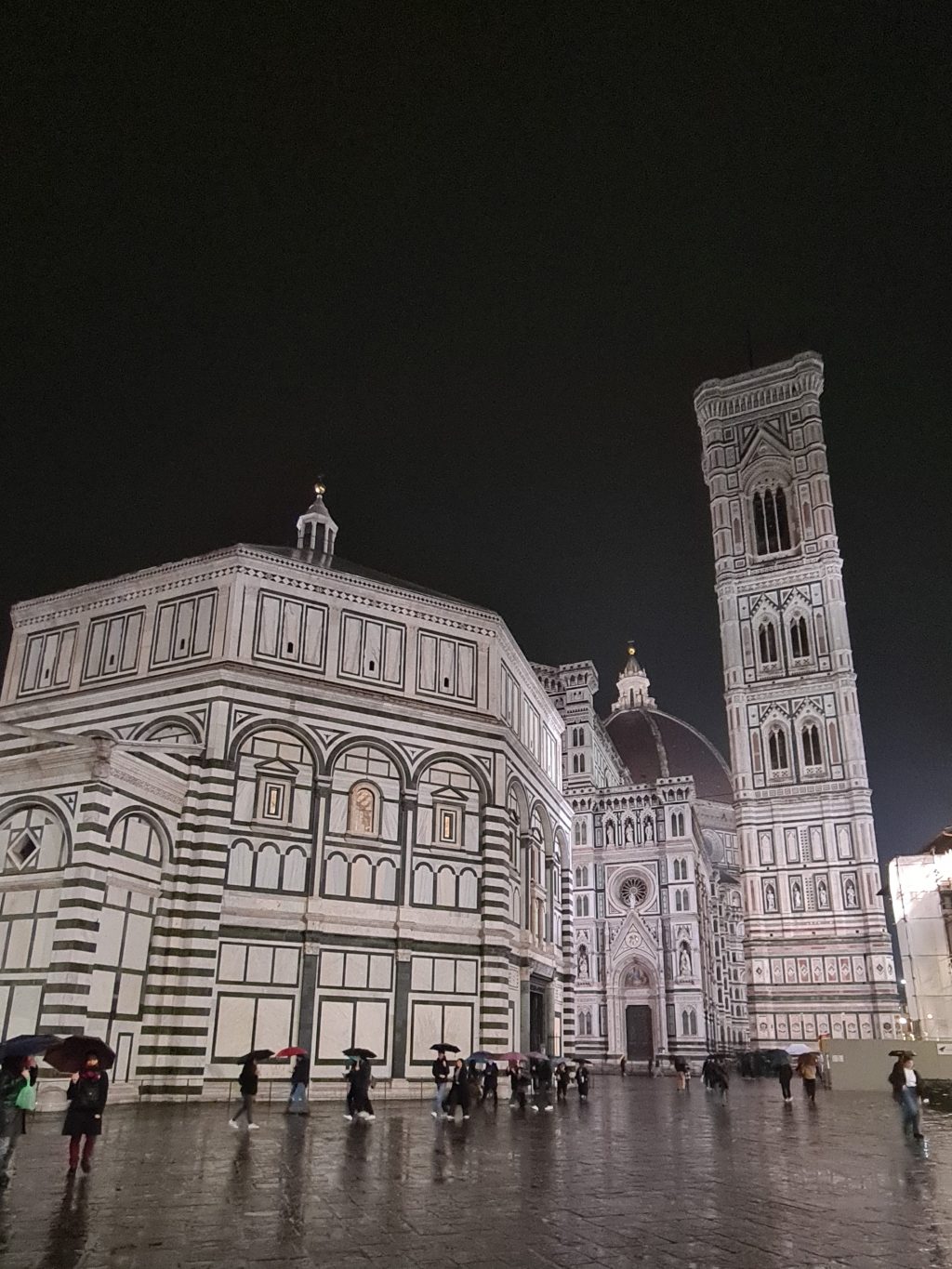
Florence is the capital of the Tuscany region and one of the masterpieces among the beautiful Italian cities, especially if you love art. It was established on both banks of the Arno River. The city was the capital of the Kingdom of Italy too for a short period. The word comes from the Latin word florentius (flower) and the symbol of the city is lily flower. Lily is also on the city’s coat of arms and attributed to Mary in Christianity.
It is better to mention briefly about the Renaissance and Medici family before our travel notes. The Renaissance movement, literally means rebirth, is a renewal movement that started in this city in Italy after the Middle Ages and took place in areas such as politics, science, art, architecture and education. The Renaissance began to sprout in the late 14th century, took place between the 15th and 17th centuries, and from there it spread to the world. The reason it started in Italy can be shown as the Medici family and the positive environment that developed there. The spirit of independence and the influence of humanism that developed after the Middle Ages, which were under intense pressure from the Catholic Church in Europe, played an important role. The Medici family lived in Florence between the 14th and 17th centuries and was a very powerful and successful family that generally operated in the banking sector. In addition, politicians and 3 popes emerged from the family. The family also managed the money of the Pope and the church thus gained considerable political power in Italy. The family placed great importance on art and played an important role in the development of art by taking Da Vinci, Michelangelo, Donatello, Boticelli and many other artists under their patronage. Lorenzo de’Medici, who was called Lorenzo the Magnificent and was elected Lord in Italy, provided significant financial support to science and art. Florence experienced its golden age during his reign.
If you want to enter every structure and visit every gallery in Florence, it would be right to spend at least 4 days. However, if you determine your priorities and leave some off the list, it is a city that can be easily visited on foot in 3 days. There is no need to rent a car, everywhere is quite close to each other. You also need an extra day to see places like Pisa, St. Giminiano and Siena near Florence, and while you are there, you should definitely see these historical and small cities too.
Transportation to Florence city from Bologna : We flew from Istanbul to Bologna and from there we went to Florence by bus. After picking up your luggage, go out from the airport, turn left and pass the taxi stands, you will see buses departing for other cities. The Appenino Shuttle departing from here goes to Florence in about 1.5 hours. Although we are not sure, we think that the ticket should be purchased online. We bought our tickets from the omio application by credit card. The Appenino Shuttle departs at 2-hour intervals. Our journey to Florence took 1.5 hours, but it took us more than 2 hours on the way back. There are also trains departing from Santa Maria Novella to Bologna.
Visit Florence and best things to do in Florence
Places to see on the Centro Storico side of the Arno river (the historical side of the city):
1-Piazza del Duomo (Duomo Square)
2-Galleria Dell’Accademia (Academy Gallery)
3-Piazza del Signoria (Signoria Square)
4-Piazza del Republica
5-Piazza del Mercato Nuovo
6-Piazza del Santa Groce
7-Piazza del Santa Maria Novella
8-Mercato Centrale
9-Bargello Museum
10-Basilica di San Lorenzo and Medici Chapel
11-Dante’s House
12-Uffizi Gallery
13-Galileo Museum
14-Via de Tornabuoni
15-Ponte Vecchio Bridge
16-Vasari Corridor
Places to see on the other side of the Arno river, Santo Spirato:
17-Pitti Palace
18-Boboli Gardens
19-Piazza Michelangelo
20-San Miniato Al Monte
Since we had visited the Cathedral on our previous visit to Florence, we did not go inside this time. Our priorities for this 2.5-days trip were visiting Uffizi Gallery, Pitti Palac-Boboli Gardens, Vecchio Palace, Bargello Museum, Medici Chapel. Academy Gallery and the baptistery of the Florence Cathedral were also in our plans if we had enough time. We saw other structures from outside. Since we went to Florence in February, we entered almost everywhere without any queues and bought our tickets at the door, except the Academy Gallery. However, during peak seanson, it is definitely worth buying online in advance.
1-Duomo Square (Piazza Del Duomo): We can say that it is the most important and most visited square in Florence. Things to see there:
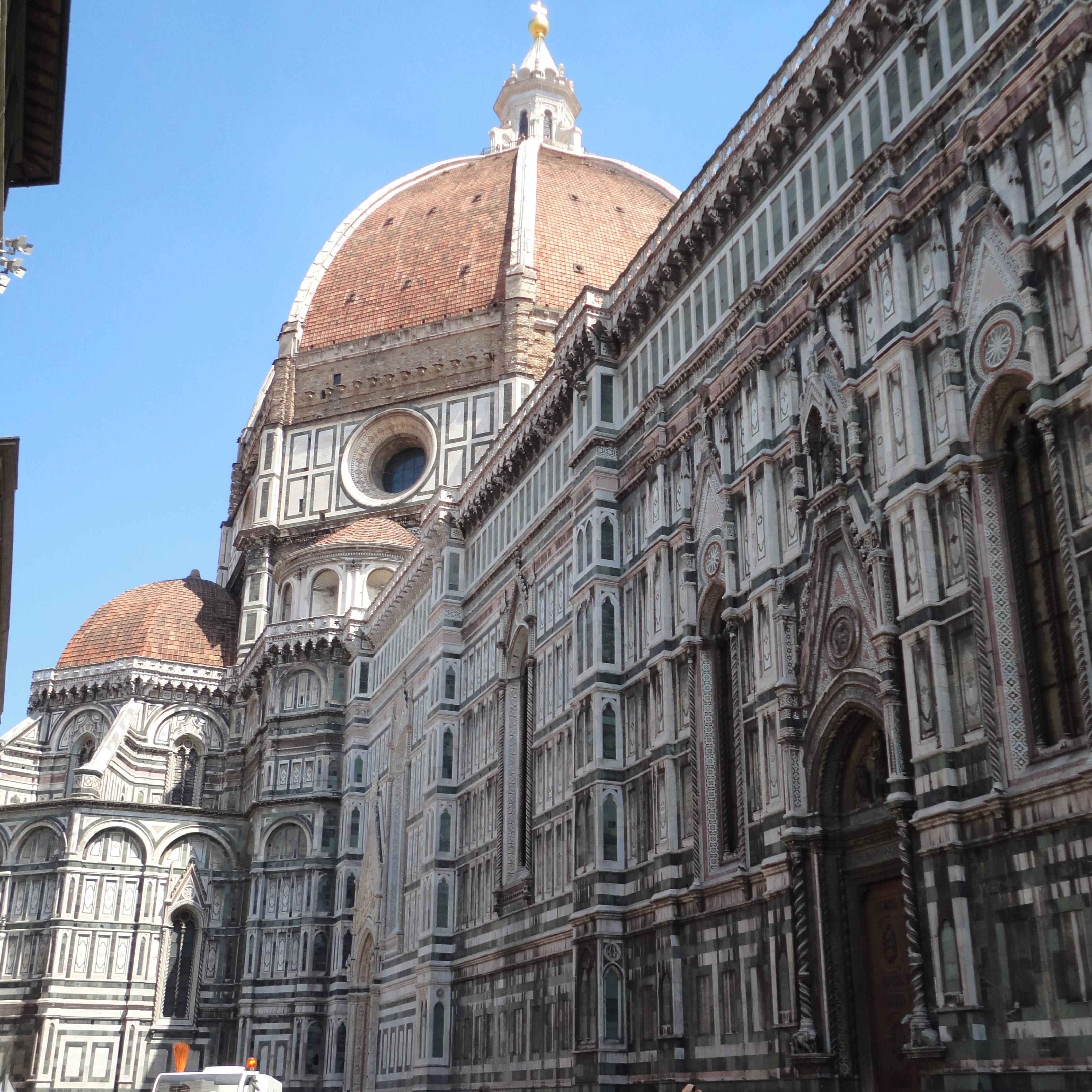
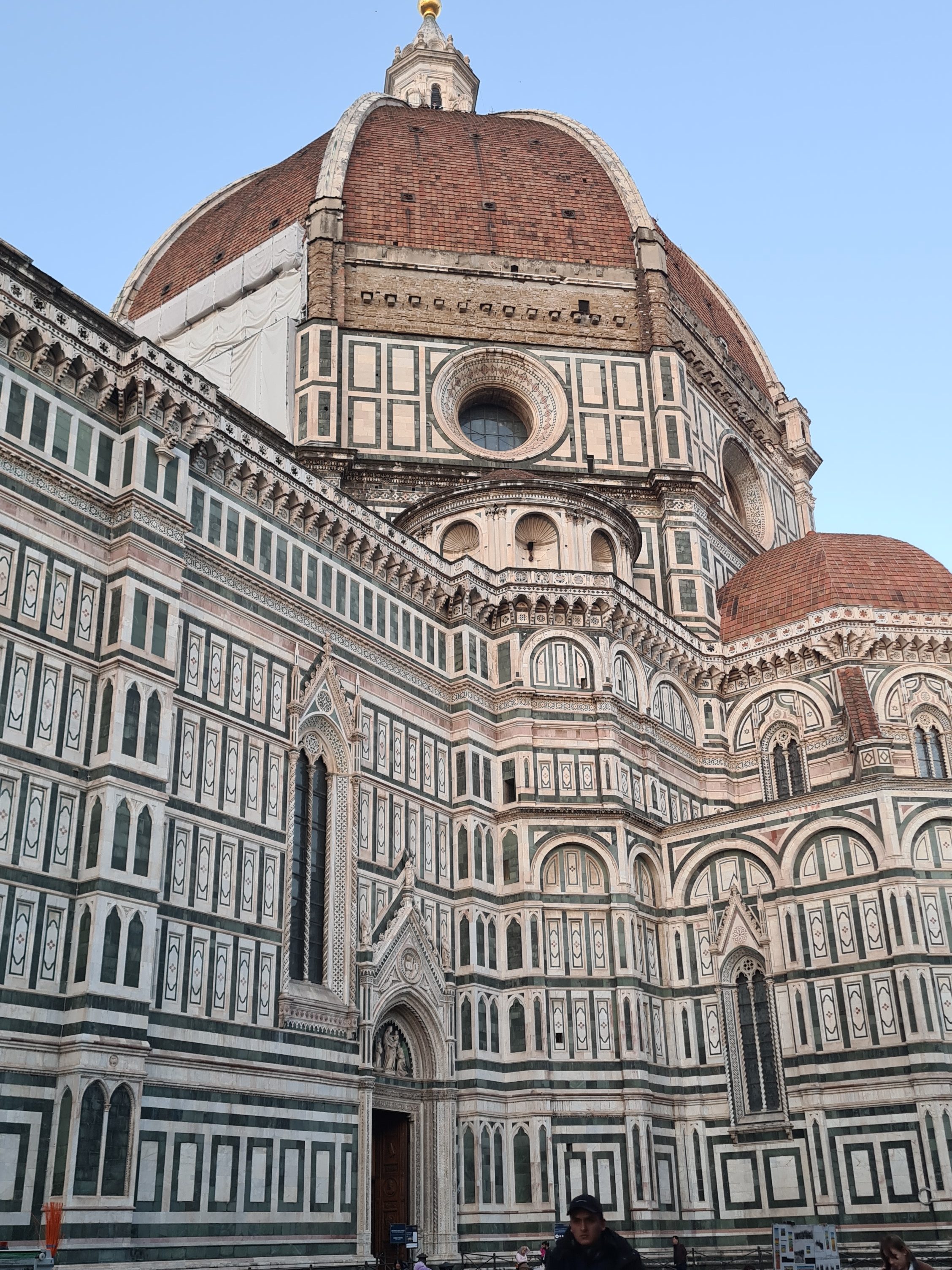
Florence Cathedral-Duomo (Santa Maria del Fiore): This is the most important Florence’s iconic structures. The history of the structure goes back to 1296. It was completed in 1496. Since its construction took many years, it has the characteristics of various periods such as Renaissance, Gothic and Romanesque in terms of architecture. It was planned in the shape of a Latin cross. The dome is located where the arms of the cross intersect. The magnificent red tile dome was completed by Brunelleschi and is visible from everywhere in the city. The impressive and very beautiful interior frescoes of the dome were made by Vasari and depicted the “Last Judgment” scene inspired by the Divine Comedy. You can go up to the bell tower and dome of the cathedral. Since we visited the Cathedral on our first visit to Florence, we skipped it this time.
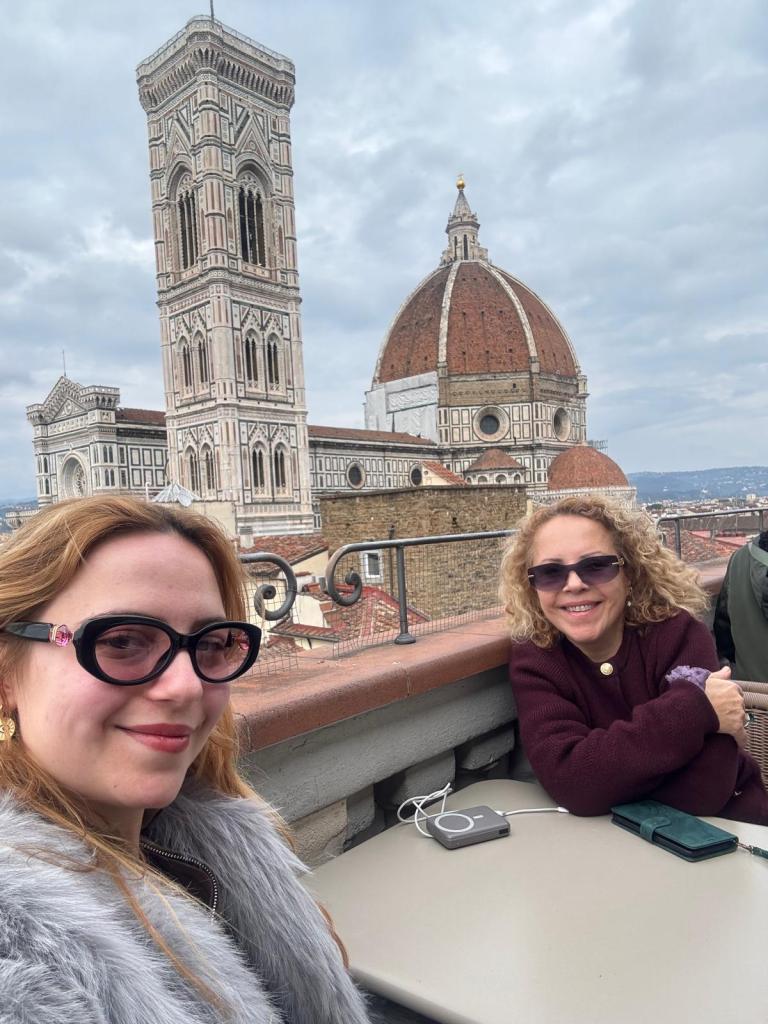
Giotto’s Bell Tower (Campanile di Giotto): The bell tower in the Duomo square belongs to the cathedral but looks like it is independent. It is one of the most striking structures in the square. The tower, which sits on a square plan, was built by Giotto di Bondore in 1359. It is approximately 85 meters high. It has Gothic architectural features and rich ornaments. It is possible to climb the tower with 414 steps and a wonderful view.

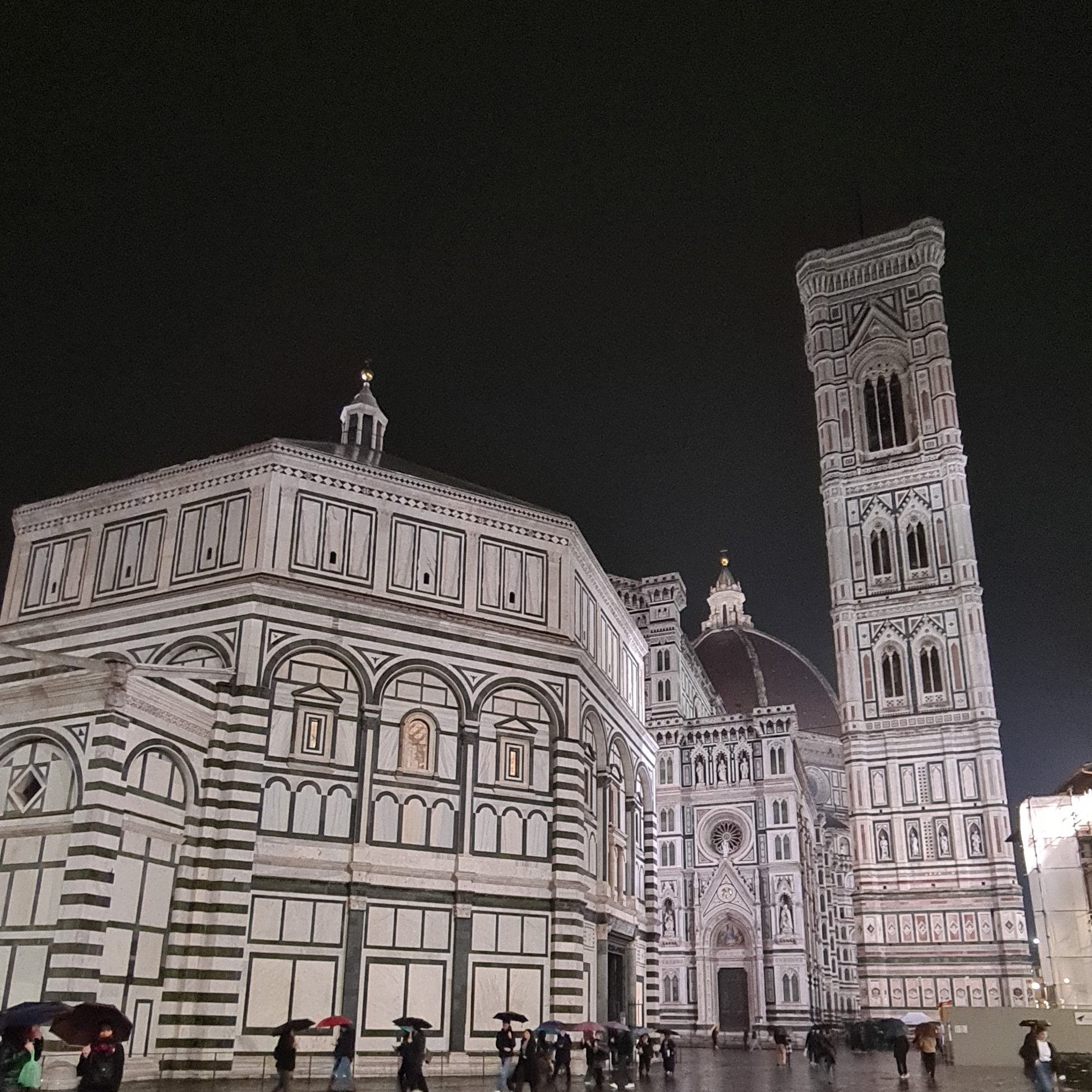
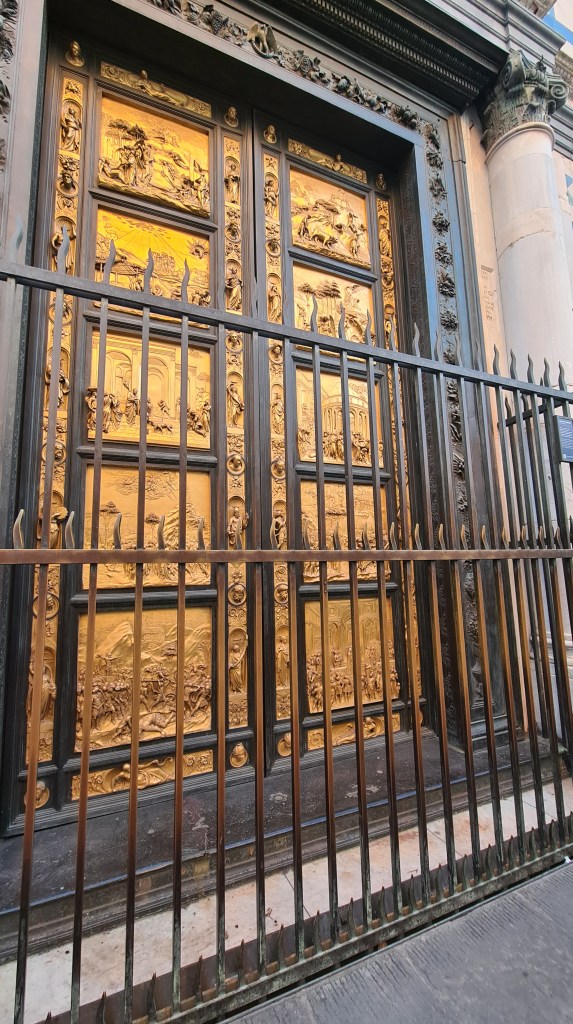
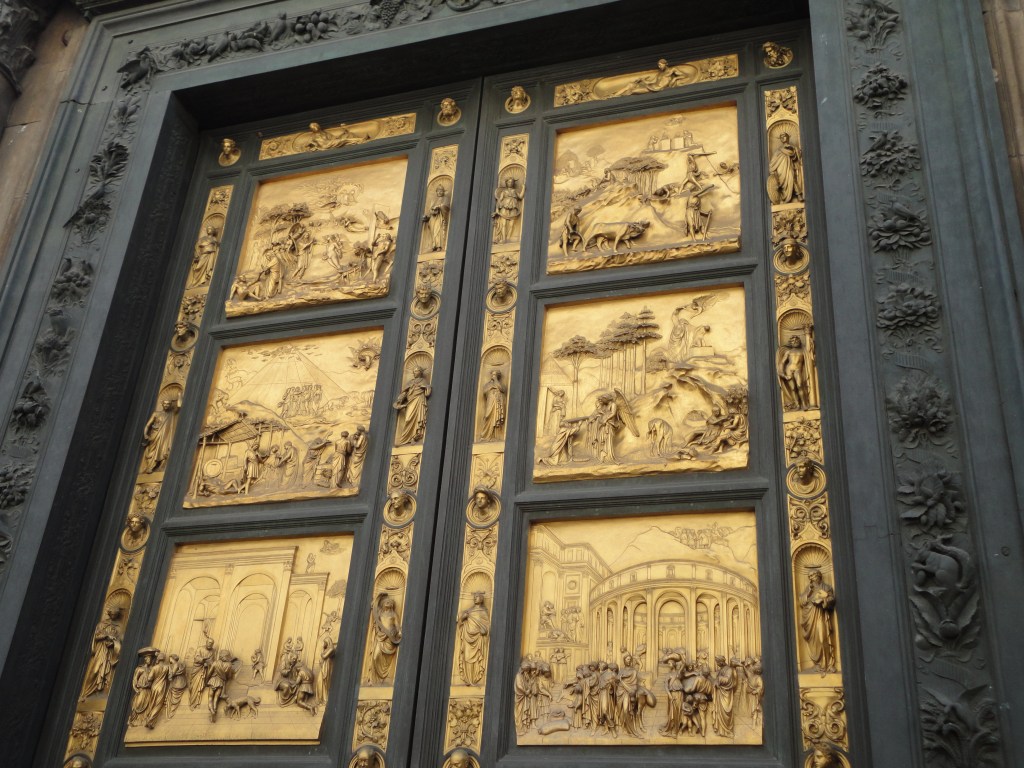
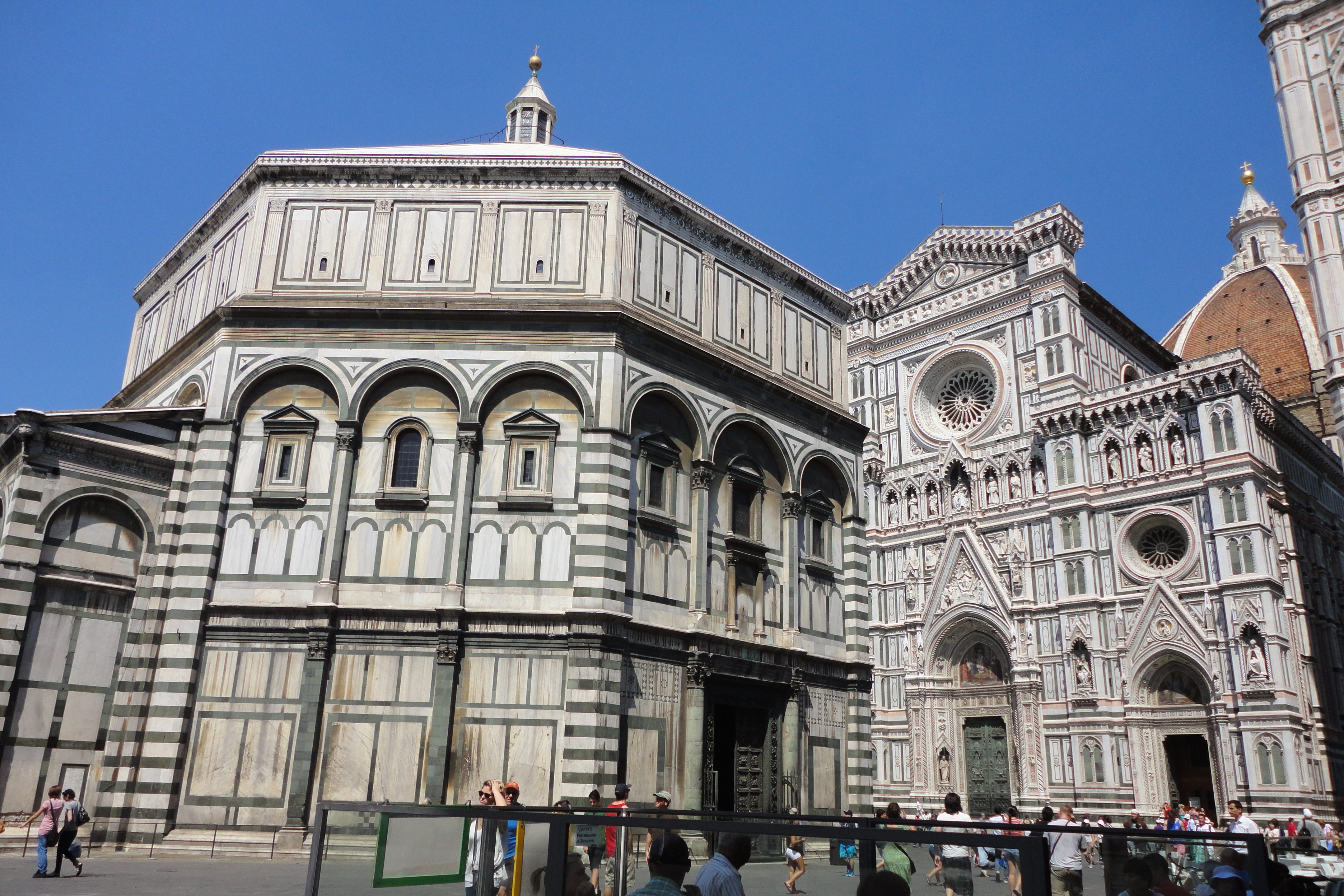
Baptistery of Saint Giovanni (Battistero di San Giovanni): Located in Duomo Square, opposite of the Florence Cathedral. It is the oldest octagonal structure in Florence with basilica status. It started to be used as a baptistery in the 12th century. The baptisms of many political and famous figures took place here. It has Romanesque architecture. Its bronze doors, colored marble coverings and mosaic decorations are quite eye-catching. Michelangelo described the beauty of the doors as the “Gates of Paradise”. When we went, scaffolding had been set up because the interior was being renovated. We did not go in because the attendant warned us that it was not very convenient to walk around and that it was difficult to see the dome.
Museo dell’Opera (Santa Maria di Fiore): The works in the Florence Cathedral are exhibited. The museum was built in 1891. The three-story museum contains works by artists such as Michelangelo and Donatello. Michelangelo’s Pieta is among the works that can be seen.
2- Galeria Dell’Accademia (Academy Gallery): Apart from the Uffizi Gallery, we can say that it is the most interesting art gallery in Florence. The original of Michelangelo’s famous David statue is exhibited here and is the most interesting work of the museum. Works by Boticelli, Paolo Uchello, Giambologna’s statue called Rape of the Sabine Women, Michelangelo’s Slaves statues and many more are here. Since it is not as large as the Uffizi, the visitor capacity is much lower and this causes long queues. We came here in the afternoon and unfortunately there was a long queue. Therefore we could not visit it. We recommend that you come here early in the morning.
3-Piazza de Signoria (Women’s Square) places to see:
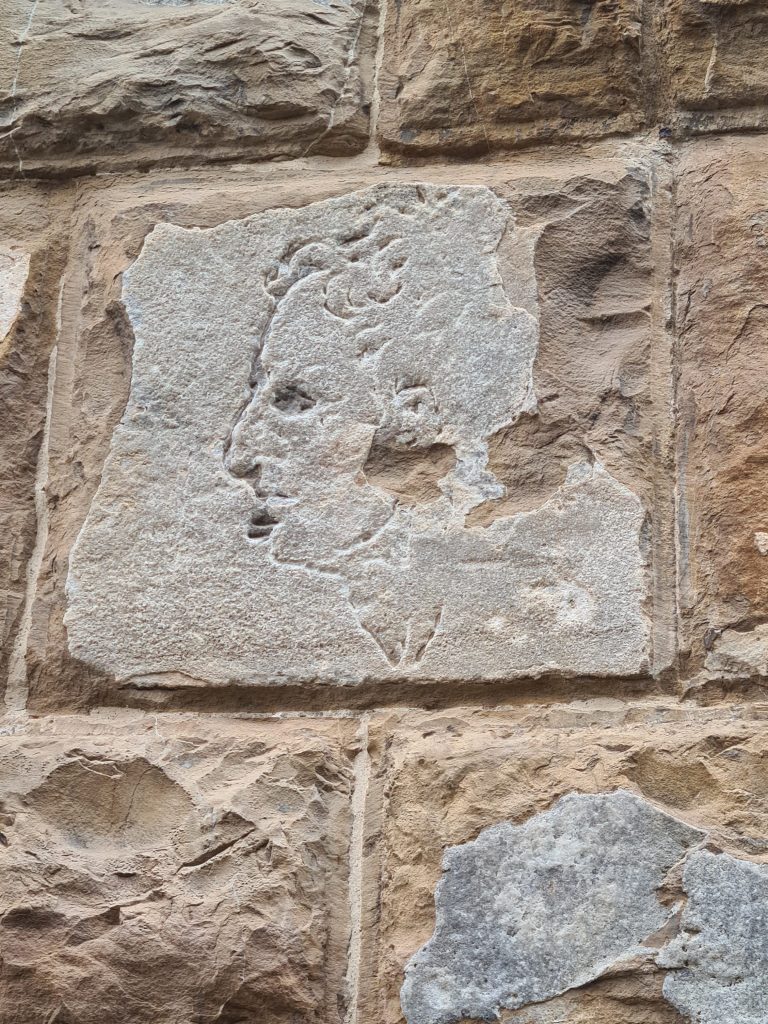
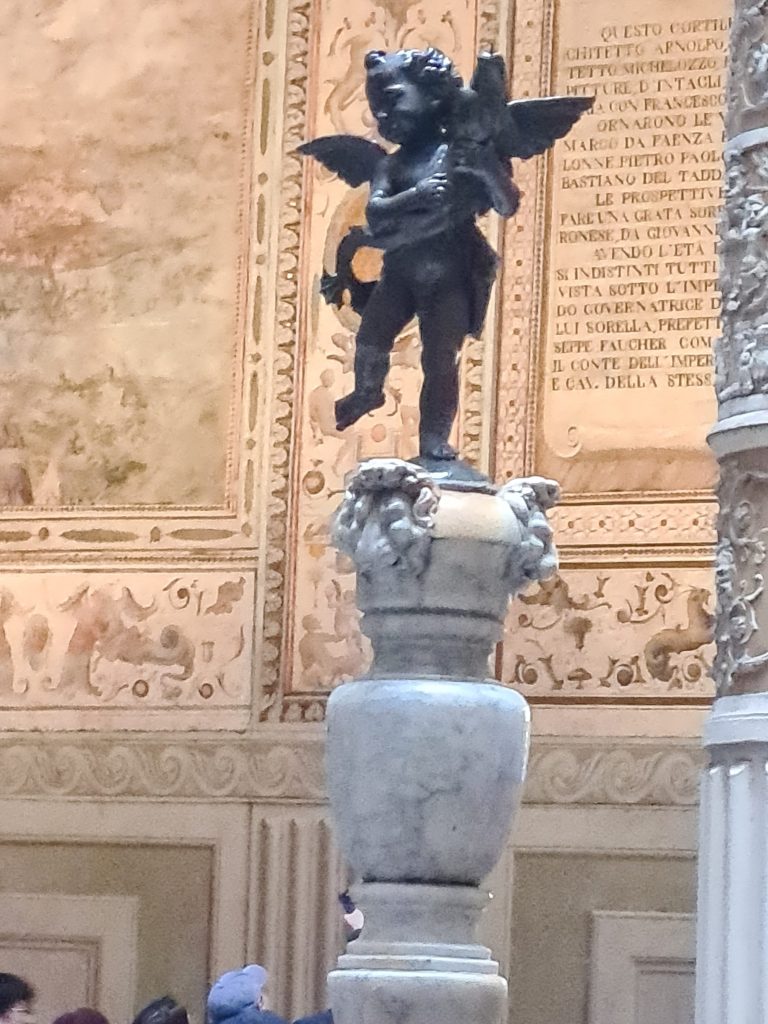
Vecchio Palace: It was built between 1298-1314 by the architect Ghibelline as the first palace of the Medici family in the city. Today, it is used as the town hall and museum. The palace was first named as Palazzo Signoria and after Medici family moved from here to Pitti Palace it has been called as Palazzo Vecchio, which means old palace. Vecchio has an interesting and beautiful courtyard. At the entrance of the palace, there is a replica of Michelangelo’s David statue (the original is in the Galleria dell’Accademia) and a white statue of Baccio Bandinelli called Hercules and Cacus. The museum’s tower, Torre d’Arnolfo, with 416 steps, has a beautiful view. The Cortile di Michelozzo (Michelozzo courtyard) on the ground floor of the palace is one of the most striking sections. There are arches designed by the artist Michelozzo, placed with gilded columns, Andrea del Verrocchio’s fountain and the statue of Dolphin and Angel (the original is inside the palace). The ceiling decorations in the palace are interesting. The Salone dei Cinquecento (Hall of the 500s) is located on the first floor. One side of the hall was painted by Da Vinci and the other side by Michelangelo. The ceiling decorations are by Vasari. The hall also has Michelangelo’s famous Statue of Victory and many other statues. The first parliament of Italy was held in this hall. The building is still used as the city hall today. There is a gold-blue patterned symbol on the walls of the Sala dei Gigli room (Lily Room). You can also see Donatello’s statue of Judith and Holofernes in this room. The Sala delle Carte Geografiche (Room of Geographical Maps) is known as the room where the Medici kept their most important documents and treasures. The walls of the room are covered with maps painted on leather. The room contains the world’s largest medieval map, “Mappa Mundi”, from the 16th century, and a rotating globe. One of the most striking rooms on the second floor is the Loggia del Saturno room, which has a decorated ceiling painted by Giovanni Stradano. This room is mostly popular for its panoramic views of the Arno Valley. The male profile, thought to be Michelangelo’s, carved on the outer wall of the Vecchio Palace is among the things to see.
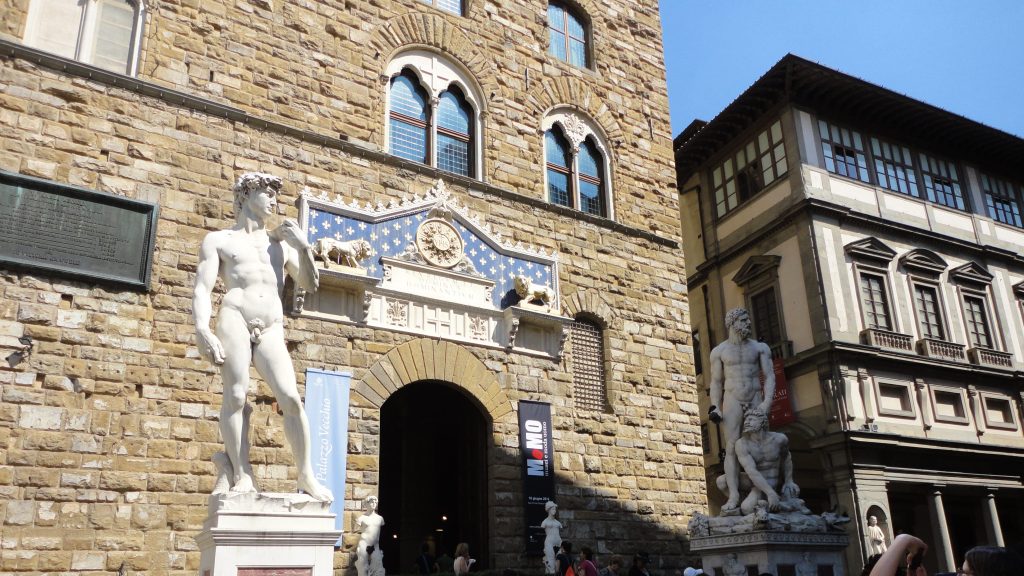


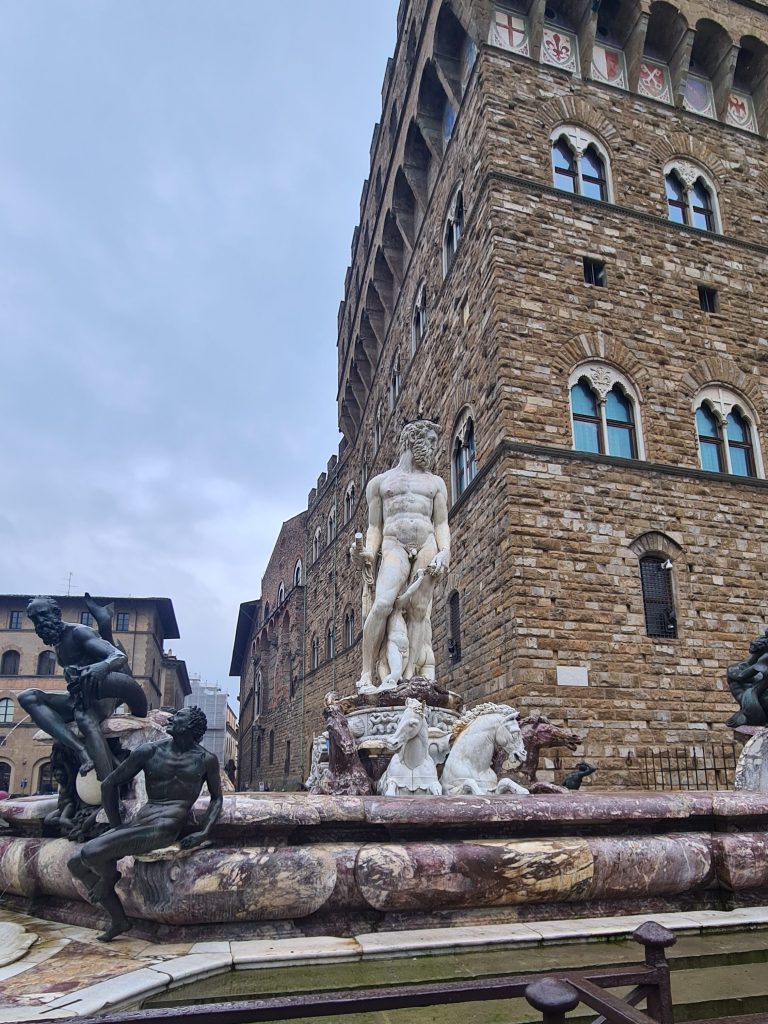
Fountain of Neptune: In the marble statue made by Bortolomio Ammanati in 1565, the sea god Neptune stands on horses. Nymphs (water fairies) and male gods are depicted around.
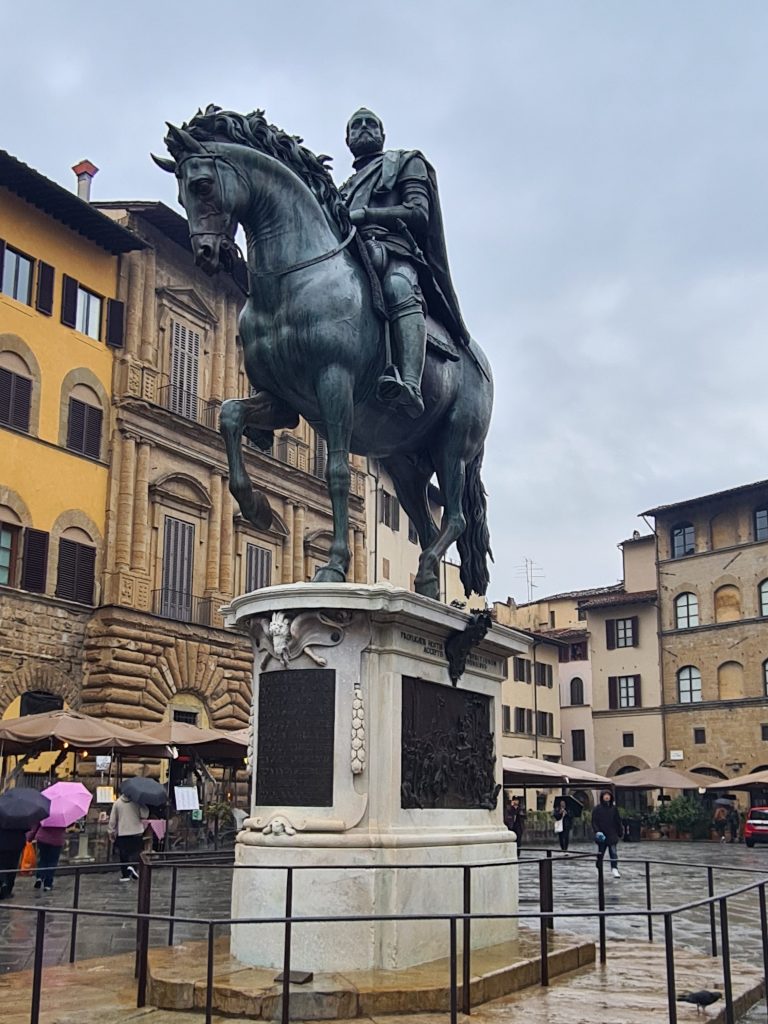
Equestrian Statue of Cosimo I de Medici: In the statue dated 1587, Cosimo from the Medici family is depicted on a horse.
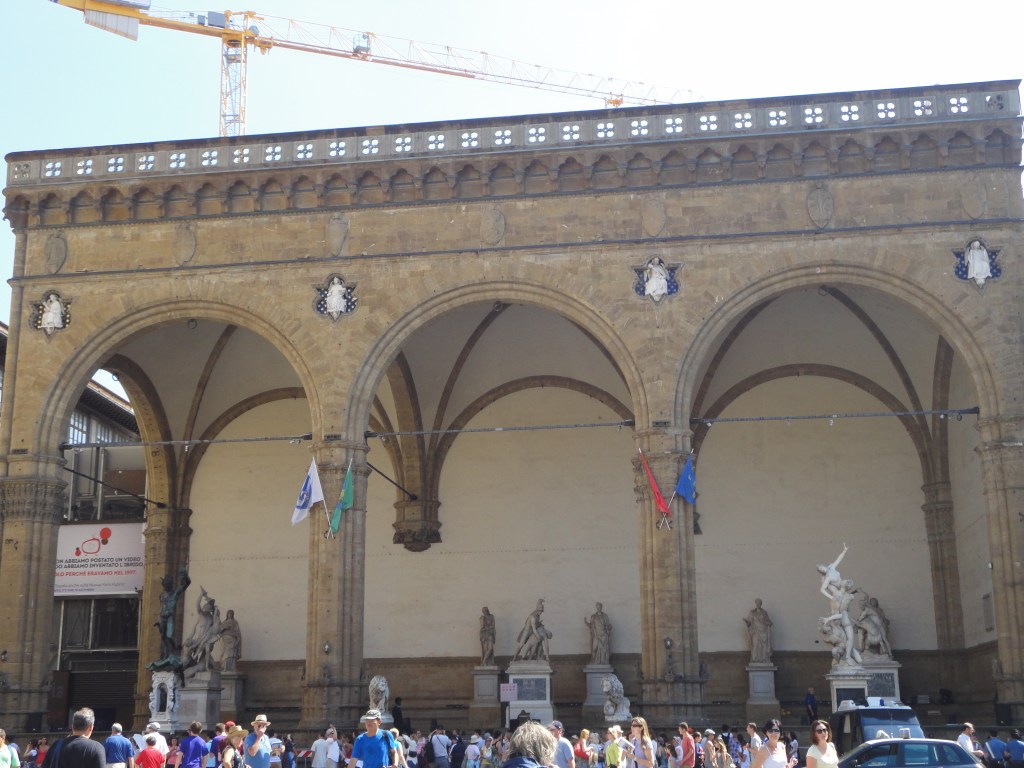
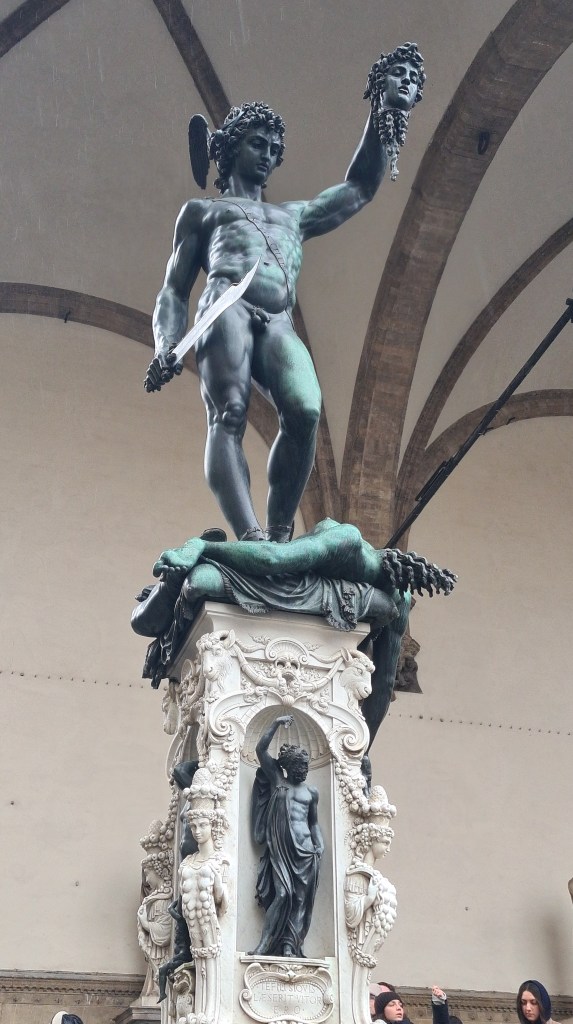
Loggia dei Lanzi: It is an open-air sculpture gallery built in the Gothic style. The building opens onto the Signoria Square with 3 arches and adjacent to the Uffizi Gallery. It was built in 1300’s to be used in public ceremonies. One of the most important works here is the statue of Perseus with the head of Medusa, which Cosmo from the Medici family commissioned from the artist Cellini. In the bronze statue, Perseus holds severed head of snake-headed Medusa in his hand, and the body of Medusa is under his feet. Other than Perseus, Ammanati’s Neptune, the Lion of Marzocco, Hercules and Cacus by Bandinelli, and The Abduction of the Sabina Women by Giambologna are among the things to see.
Palazzo Gucci: It is located in Signoria Square and houses a museum and exhibition where you can learn about the history of the Gucci brand. We did not visit it.

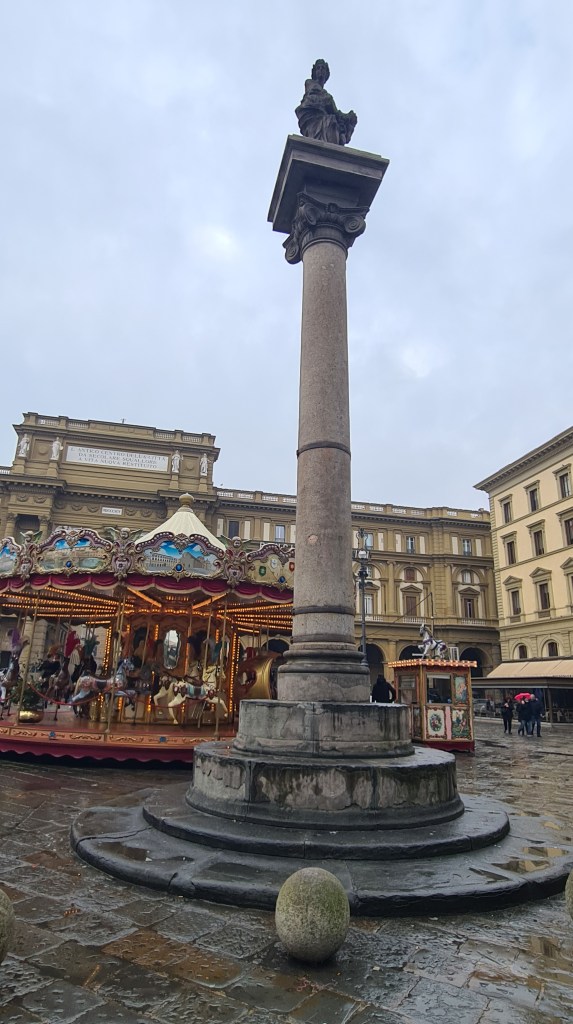
4- Piazza dell Republica: There is a carousel that has been subject of photographs in the square and the Column of Abundance, which was made by Donatello.
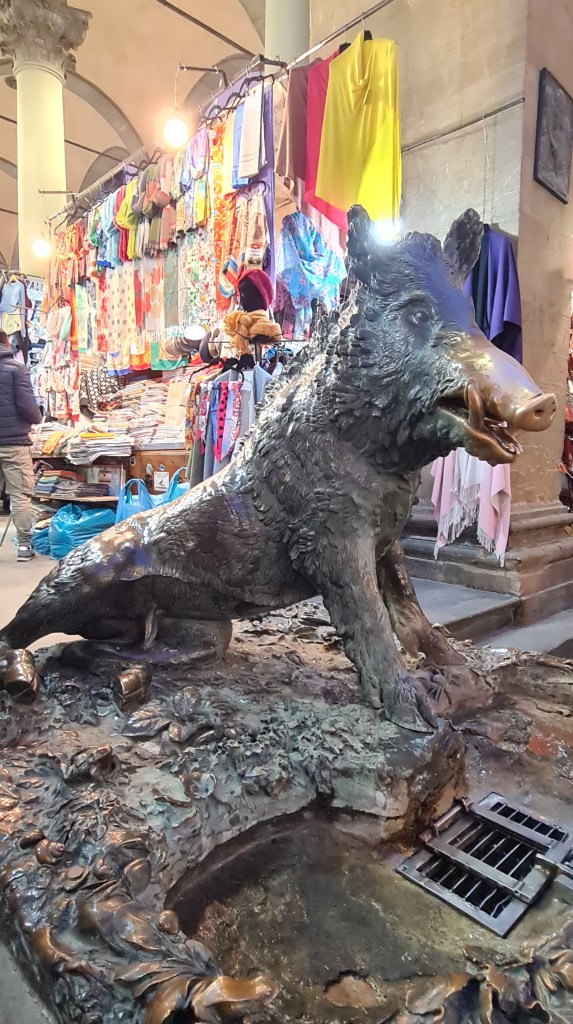
5- Piazza del Mercato Nuovo: The Piglet Fountain and an open market where local products are sold are popular to see there. People throw coins and make wishes. It is believed that touching the pig’s nose will bring luck. In addition, after putting a coin in the pig’s mouth, you should wait for it to fall with water. It is believed that if the coin slides easily, your wish will come true.
6- Piazza del Santa Groce: Basilica of Santa Groce (Holy Cross Church) – Completed in 1442. It contains the tombs of famous names such as Michelangelo, Galileo, and Machiavelli. This beautiful structure worth seeing is also known as the Temple of Italian Glories.

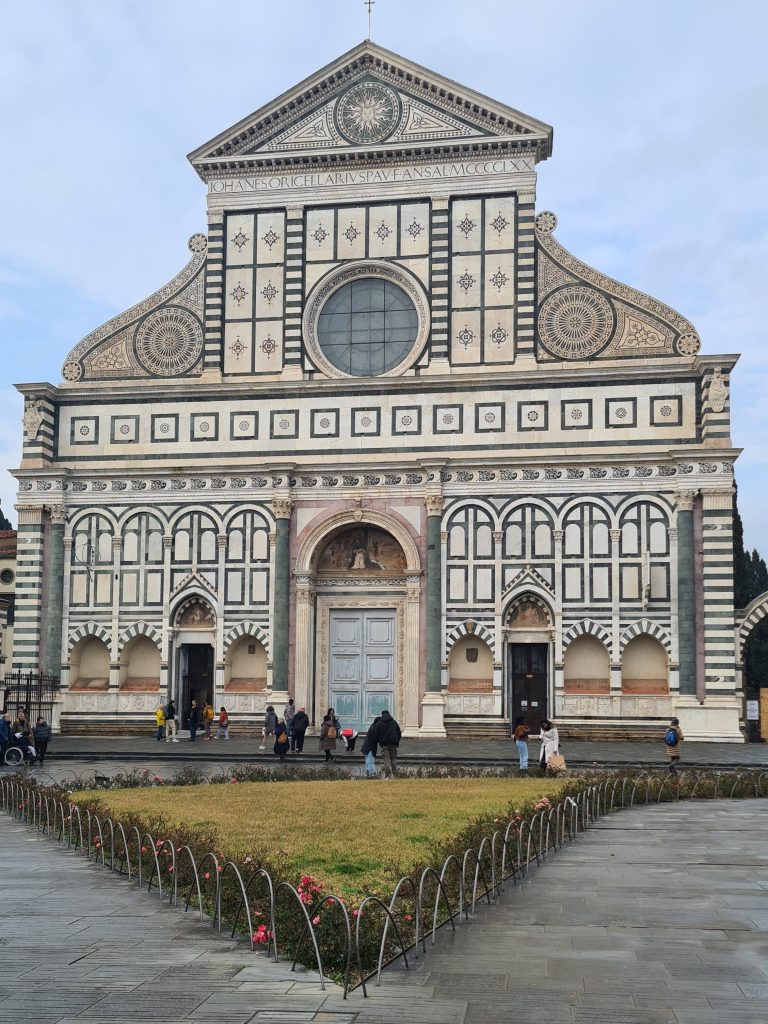
7-Piazza del Santa Maria Novella: This is the first square you will see if you are coming to Florence by train. Basilica Santa Maria Novella is located in the square. It is a very beautiful and elegant structure. The structure was completed by Leon Battista Alberti in 1470. It is called Novella because it was built on a temple that was already in its place. Its exterior is made of marble and interior is as beautiful as its exterior. It is decorated with frescoes and paintings by famous artists. One of the most important of these is the Holy Trinity by artist Masaccio. Behind Jesus on the cross, God and the Holy Spirit are depicted together. In addition, the premature birth scene above the door by artist Sandro Boticelli, the green portico by Paolo Ucchello and the Spanish chapel are among the beauties to see.
8-Mercato Centrale: It is close to the train station The lower floor is shopping area and the upper floor is food and beverage area. There is all kinds of food. We did not have enough time to go inside. The food section is good for some and mediocre for others, but it is suitable for a cheap snack.
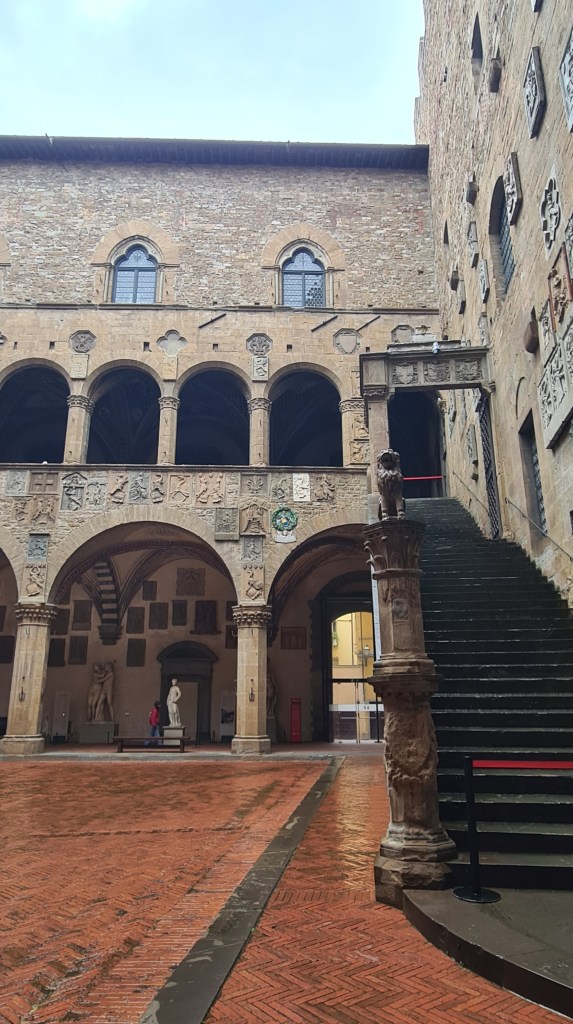
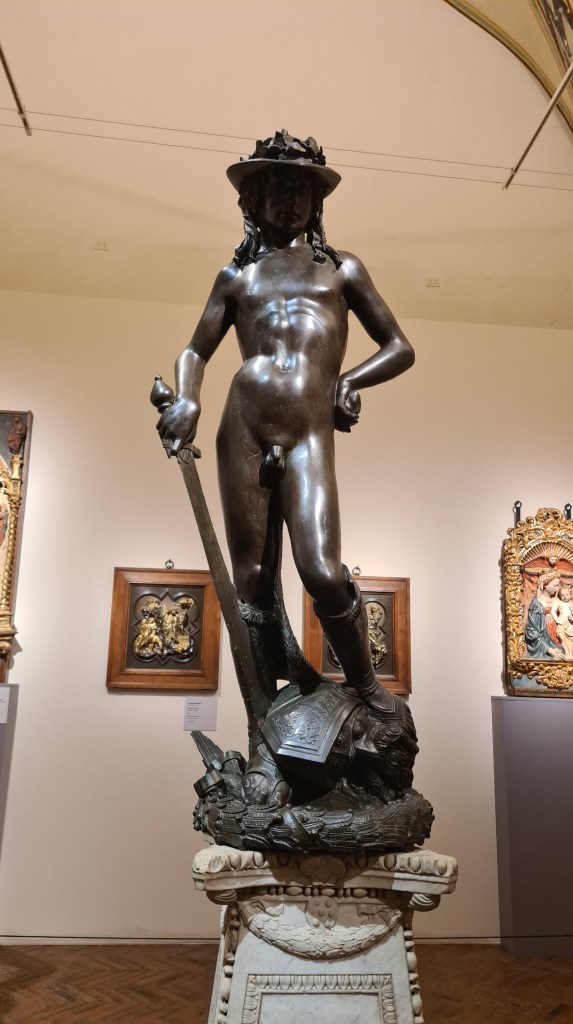
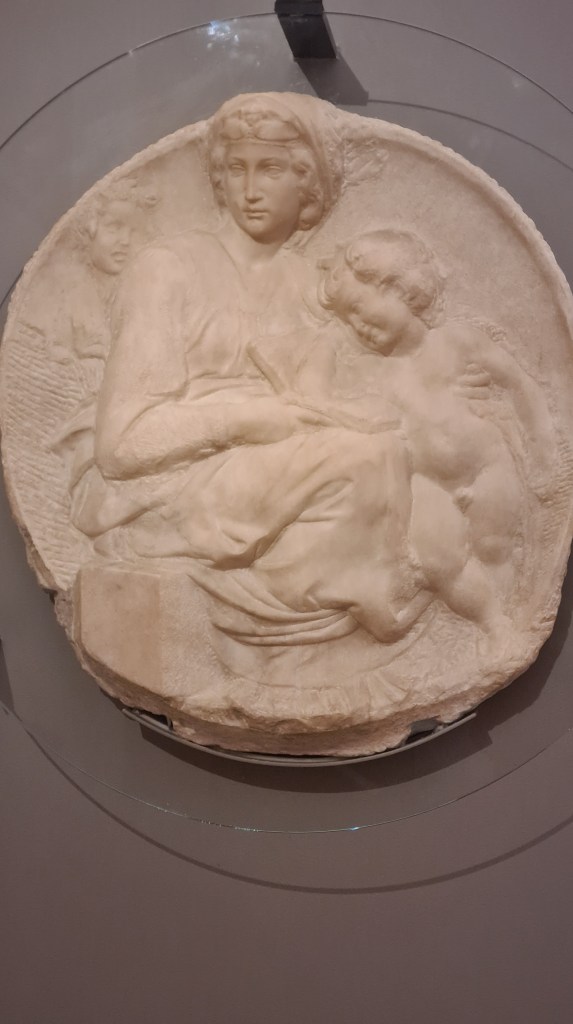
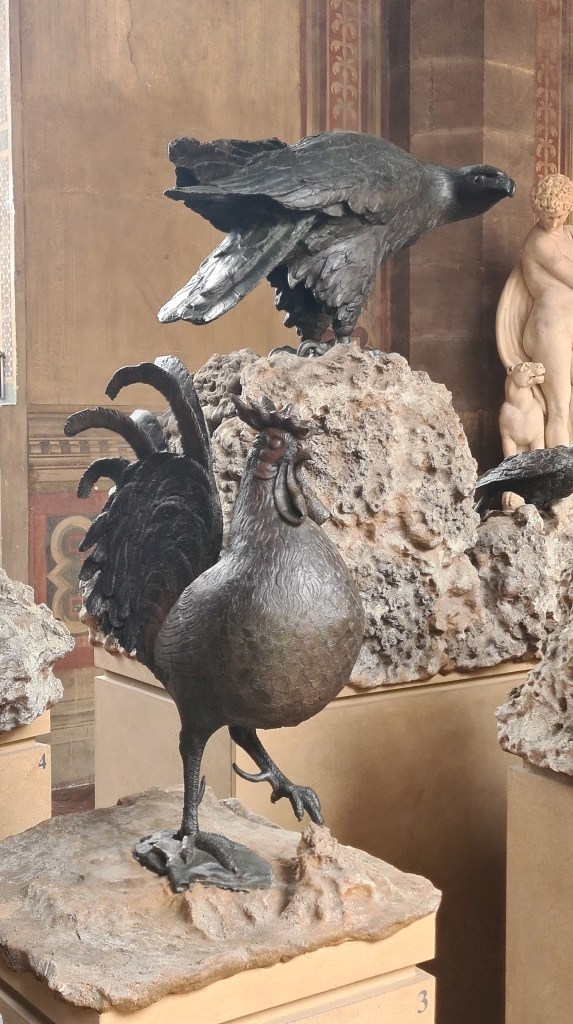
9- Bargello Museum: The Bargello Museum, also known as the Bargello Palace, located close to Signoria Square. It is worth seeing. It was a prison and now it is used as an art gallery. The famous statue of David with a hat and a sword in his hand, made of bronze by Donatello in 1430-1440, St. George by Donatello, and Michelangelo’s Bacchus and Pitti Tondo are among the works exhibited here. The Michelangelo room, which is passed through the courtyard, and the area where bronze animal statues, metal works, weapons, coins and various jewelry are exhibited, which can be reached by going up the stairs in the courtyard, are worth seeing. Address: Via del Proconsolo
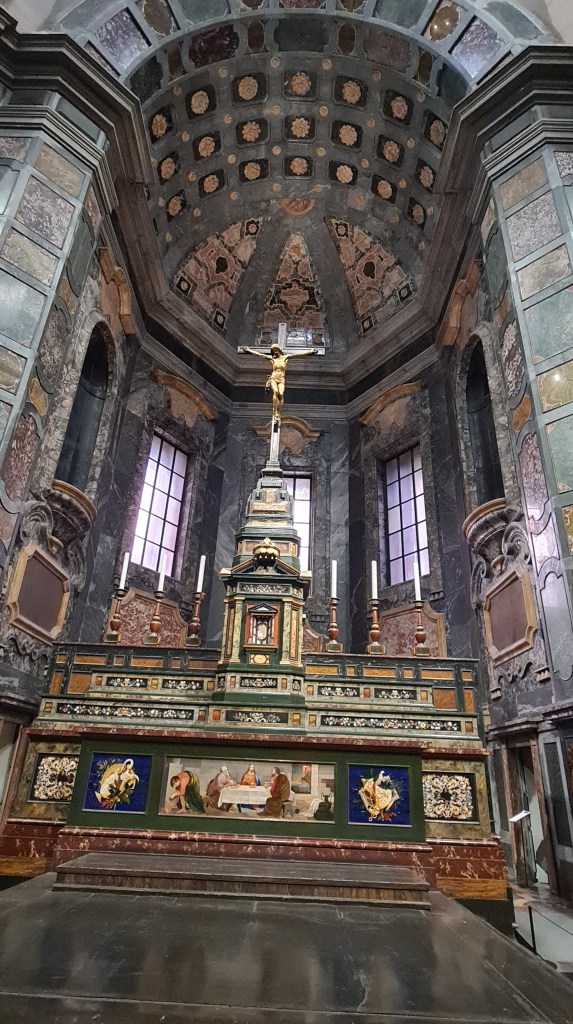
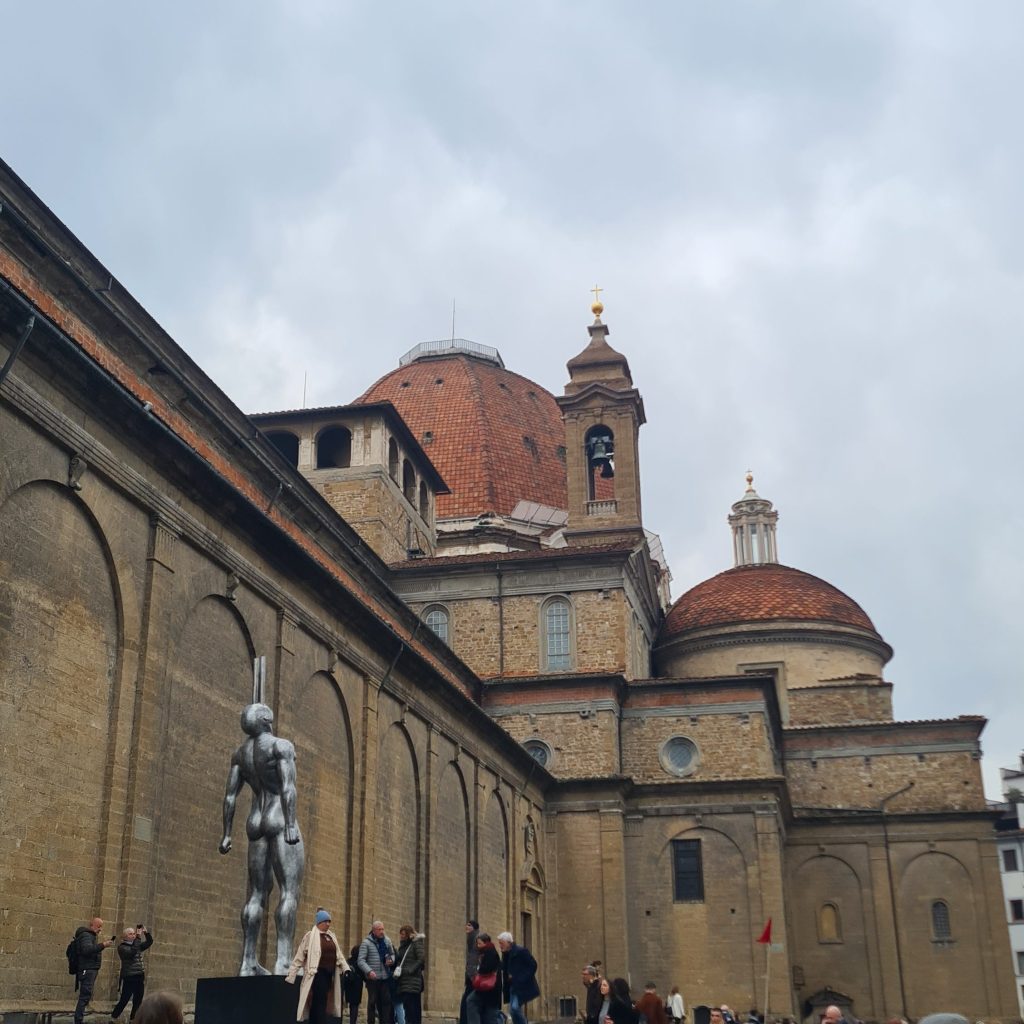
10-Basilica di San Lorenzo and Medici Chapel (Basilica of San Lorenzo): It is one of the largest basilicas in the city. The chapel contains tombs of all important members of the Medici family. It can be considered one of the most important examples of Renaissance architecture and is truly worth seeing. The chapel was designed by Michelangelo. The basilica and the chapel are located in the same building, but they can be visited by paying separate fees.
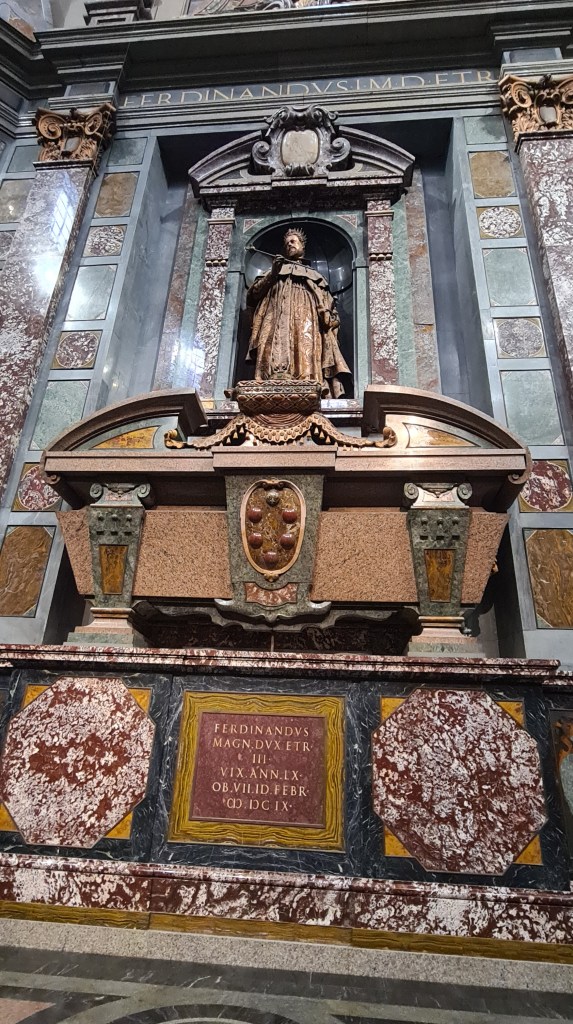

Tomb of Lorenzo Duke of Urbino
with the statues Dawn and Dusk
11-Dante’s House: Dante, the author of the Divine Comedy, wrote this famous work here. It was rebuilt in accordance with the original that was destroyed. It is used as a museum and contains the poet’s original works and information about his life. We did not go there but we included it in the article for the sake of knowing.
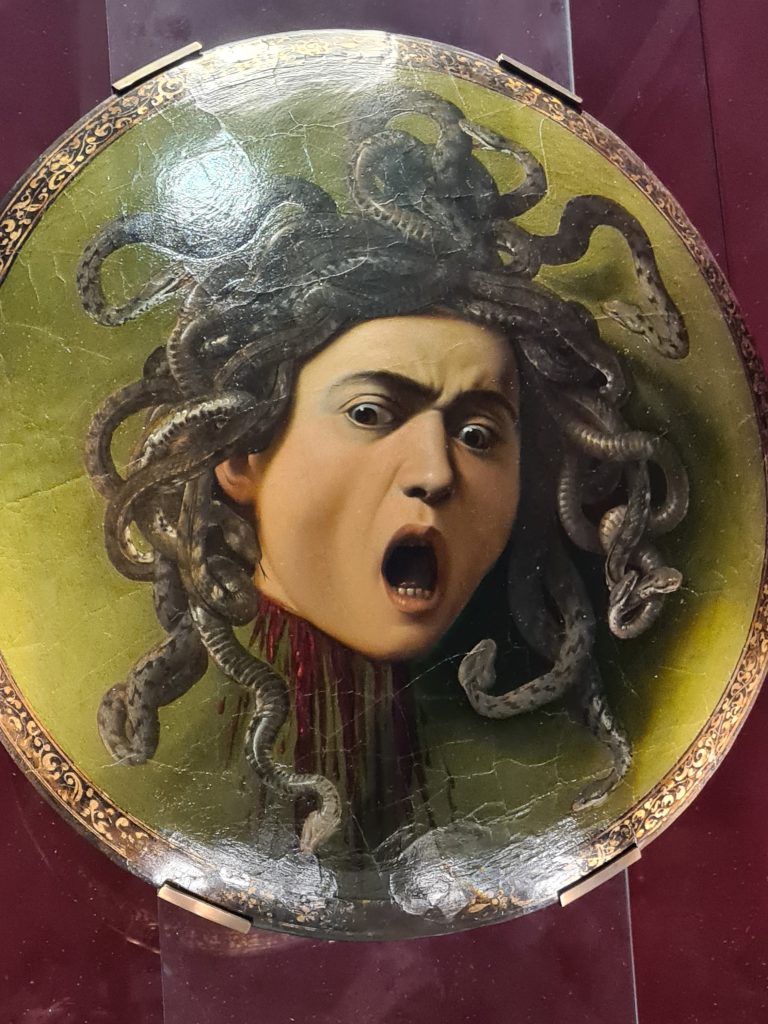
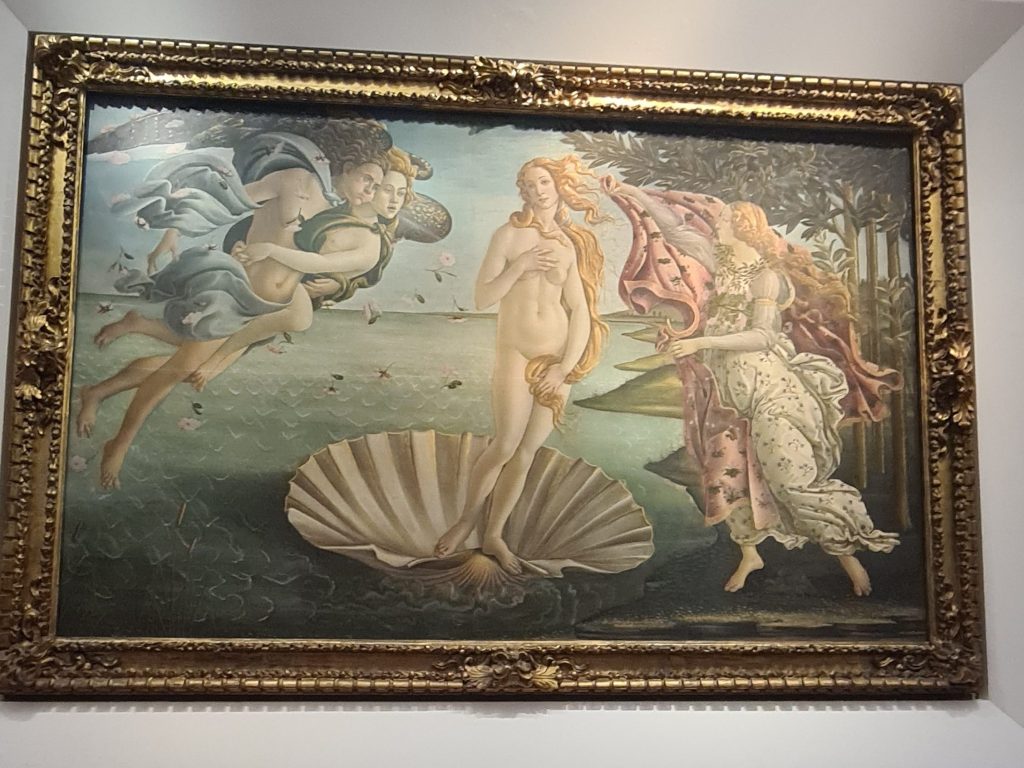
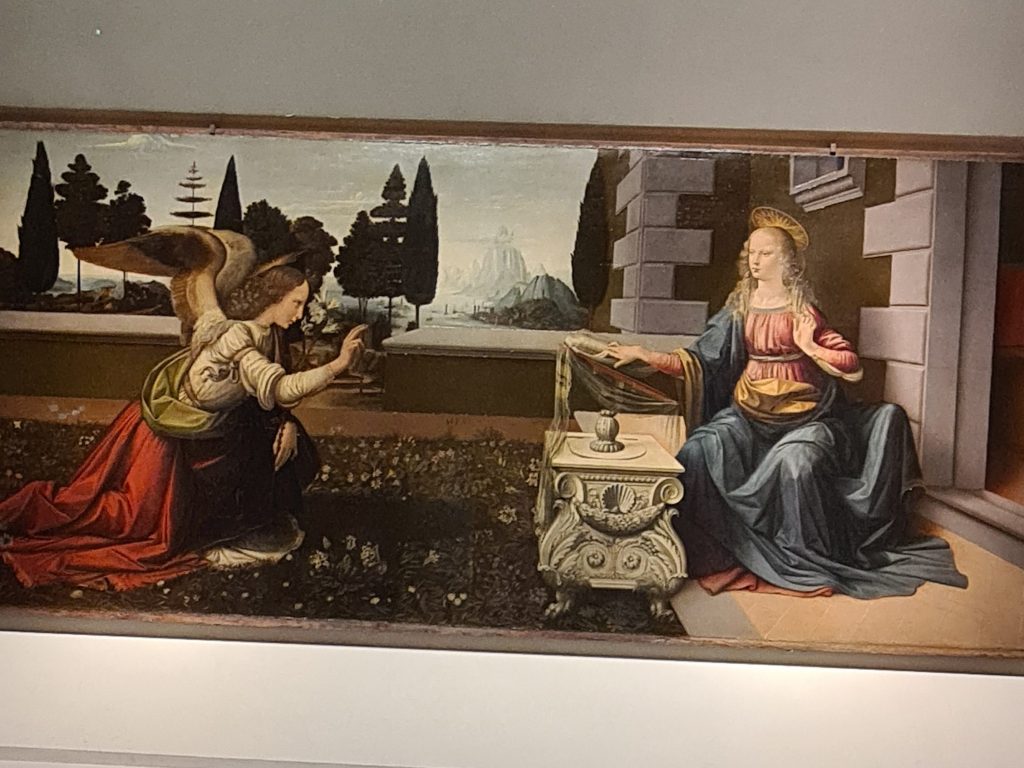
12- Uffiizi Gallery : Uffizi is one of the most important art centers not only in Italy but also in the world. It was built between 1560-1580 and designed by Giorgio Vasari. It hosts the works of many artists from the 14th century Renaissance to the present day. Uffizi means office as a word and was built for the purpose of using Duke Cosimo I, as his office. Many works from the Renaissance period and the art collection of the Medici family fascinate people. In addition to works by masters such as Da Vinci, Raphael, Michelangelo, Botticelli, and Caravaggio, there are also works by German, Dutch, and Belgian artists. The building, which bears Renaissance architectural features, is two-story and has U-shaped design, and includes office areas inside, which were later converted into a gallery. Botticelli’s world-famous Birth of Venus painting (Nascita di Venere), Caravaggio’s Medusa and Bacchus, Titian’s Venus of Urbino, Piero della Francesca’s Duke and Duchess of Urbino, Raffaello Sanzio’s self-portrait, Battista’s Angel Playing a Lute, Leonardo Da Vinci’s Annunciation, and dozens of other paintings and sculptures are among the things to see. We purchased a combination ticket that includes Uffizi Gallery, Pitti Palace, and Boboli Gardens. The ticket worths 40 Euros per person snd is valid for 5 days. You don’t need to visit all three on the same day. You can visit whenever you want in 5 days after buying it. There are also tickets that include the Vasari corridor. If you want to enter Vasari corridor as well, there is a passage from the Uffizi gallery to the corridor.


13-Galileo Museum: It is located very close to the Uffizi Gallery. It was established by the University of Florence in 1972 in the Castellani Palace. It holds the title of the world’s largest science museum. Galileo’s personal belongings, his severed finger preserved in a glass jar, scientific materials from the Renaissance, Galileo’s original telescope, Antonio Santucci’s famous globe and the science library are among the things that can be seen. We did not visit it, but I want to add it to the article for information.
14- Via de Tornabuoni: The street where luxury shopping stores such as Ferragamo and Gucci are located. There are stores selling designer products next to luxury brands. The palace, built by the Strozzi family in the 15th century, was used as a residence until 1937. Today, it is used as a modern art gallery and temporary exhibitions are held. It was built by Filippo Strozzi, a rival of the Medici family. While walking on Via de Tornabuoni, the Column of Justice (monument of justice) in the square is among the things to see.

15-Ponte Vecchio Bridge: It is one of the 4 bridges with a market in the world. It was built in the 14th century, at the narrowest point of the river and is located on 3 arches. The Germans did not destroy the bridge when they bombed the city. Most of the shops on the bridge are jewelers or shops selling souvenirs. The view is beautiful both day and nigth.

16- Vasari Corridor : After the Medici family moved from the Vecchio Palace to the Pitti Palace, they had a passage called the Vasari Corridor built on the bridge in order to secretly pass between the two palaces. Vasari built the passage in a short time in 1565 and is 1.5 km long. When you look at the Ponte Vecchio Bridge from the outside, you can see a part of the corridor on the upper floor of the bridge.

Santo Spirito side of the Arno River:
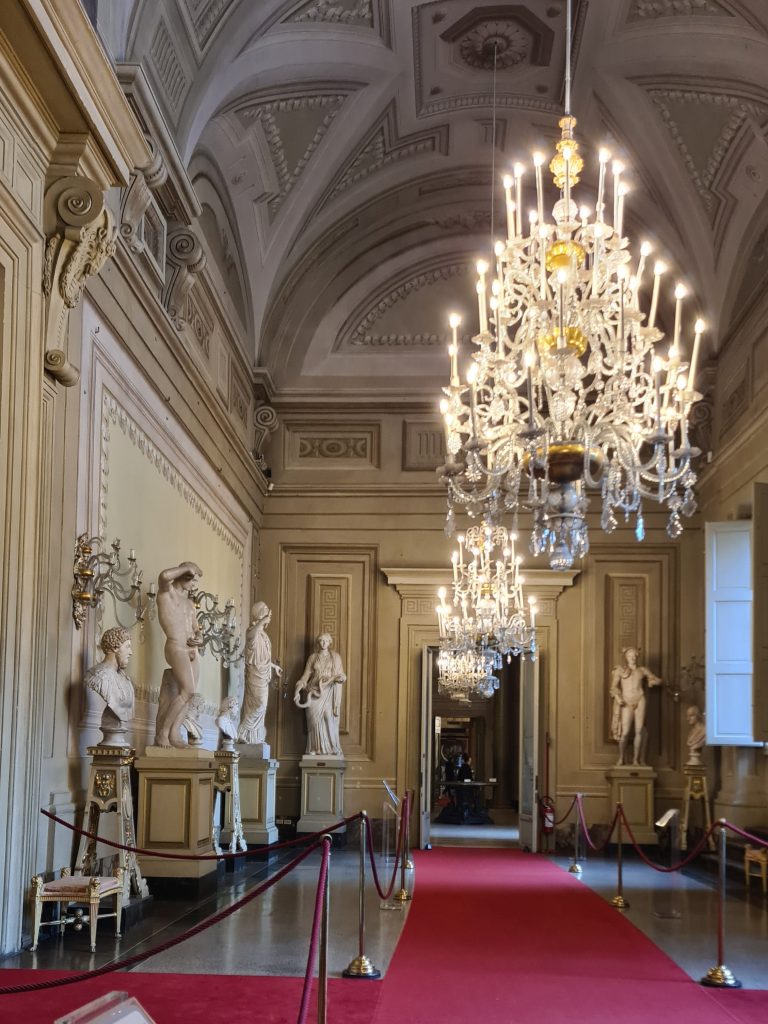
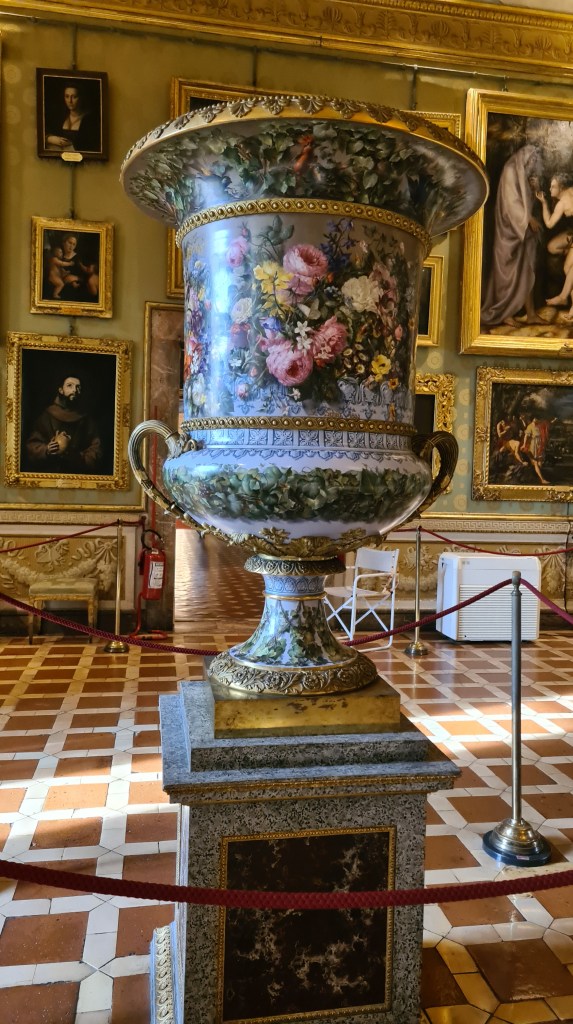
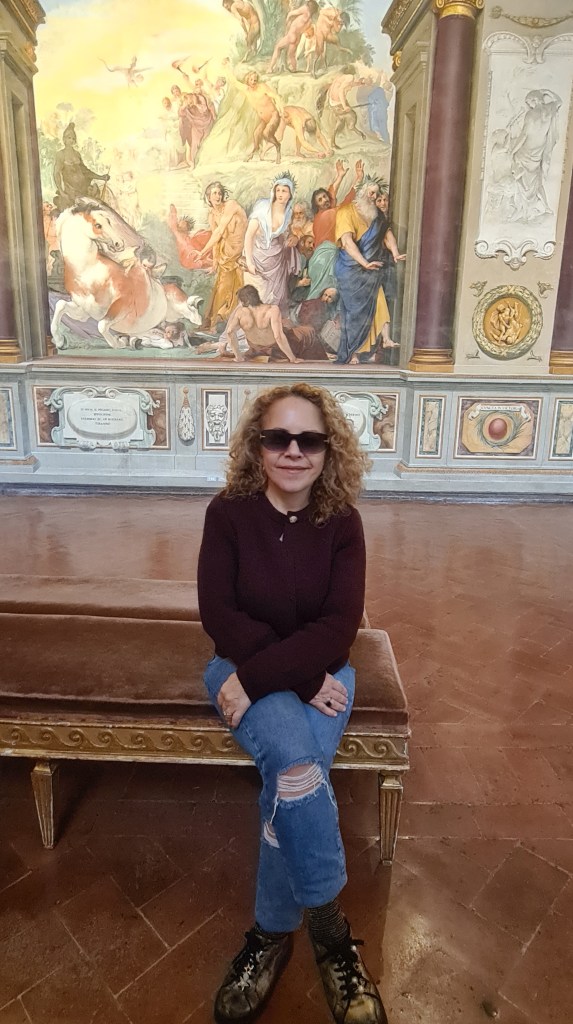
17- Pitti Palace (Palazzo Pitti): It is a magnificent Renaissance palace located close to the Uffizi Gallery. The first structure, built in 1458 as the residence of banker Luca Pitti, was purchased by the Medici family in 1549 and used as the family’s administrative center. After being used as a base by Napoleon for a while in the 18th century, it served as the royal center of the Italian Union. It is used as a museum and gallery today. The Palatine Gallery inside contains works by many artists from the Renaissance to the Baroque period. It really should be among the top places to visit both in terms of ceiling decorations and the works inside. There is also a section in the palace where examples of both Renaissance period clothing and past creations of famous brands that shaped fashion are exhibited.

18- Boboli Gardens (Giardini di Boboli): It is the most famous garden in Florence and located next to the Pitti Palace. It was designed for Eleonora di Teleodo from the Medici family when Ufizzi Gallery was their residence. There are monuments dedicated to the Nymphs in Greek mythology, as well as Renaissance period statues, fountains and artificial caves in the garden. The garden is irrigated with water from the Arno River.

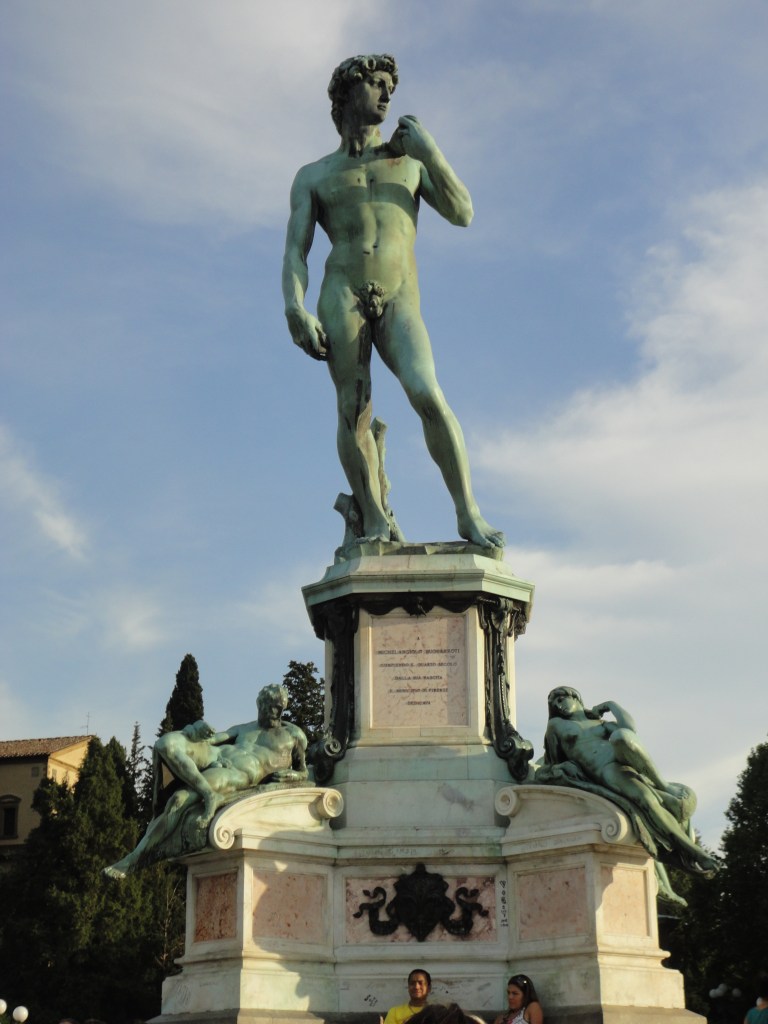
19- Piazza Michelangelo: The square named after Michelangelo. It has a panoramic, beautiful view of Florence.
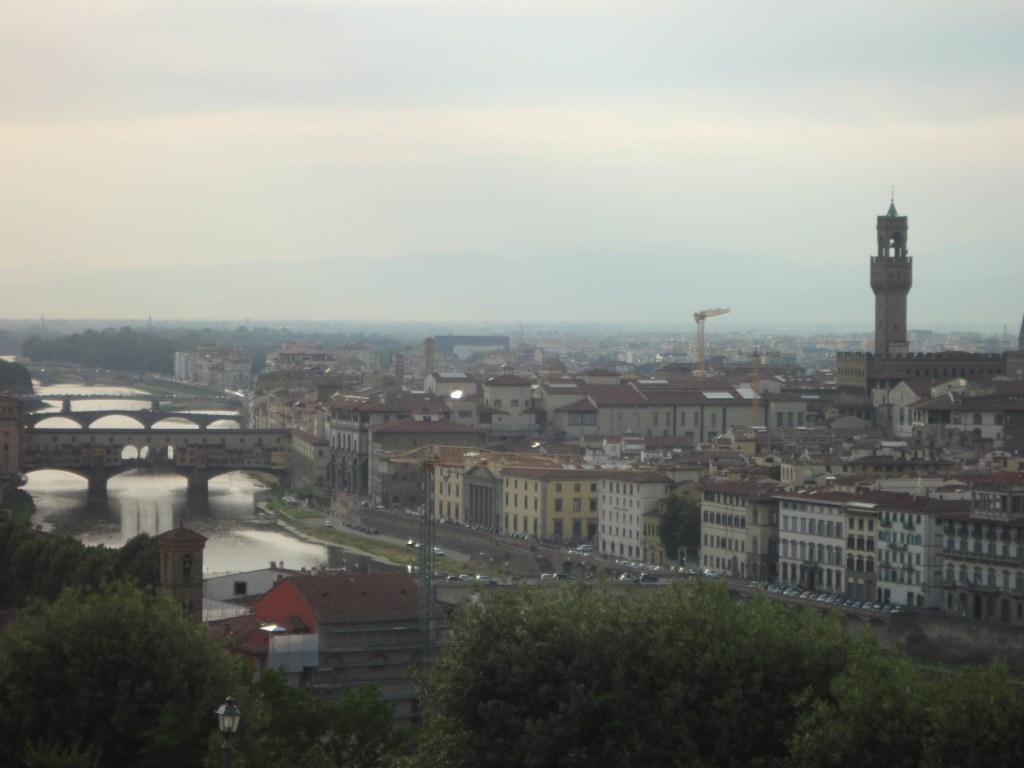
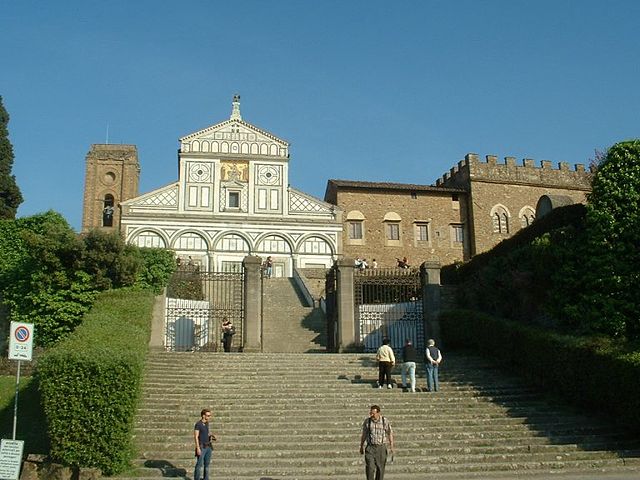
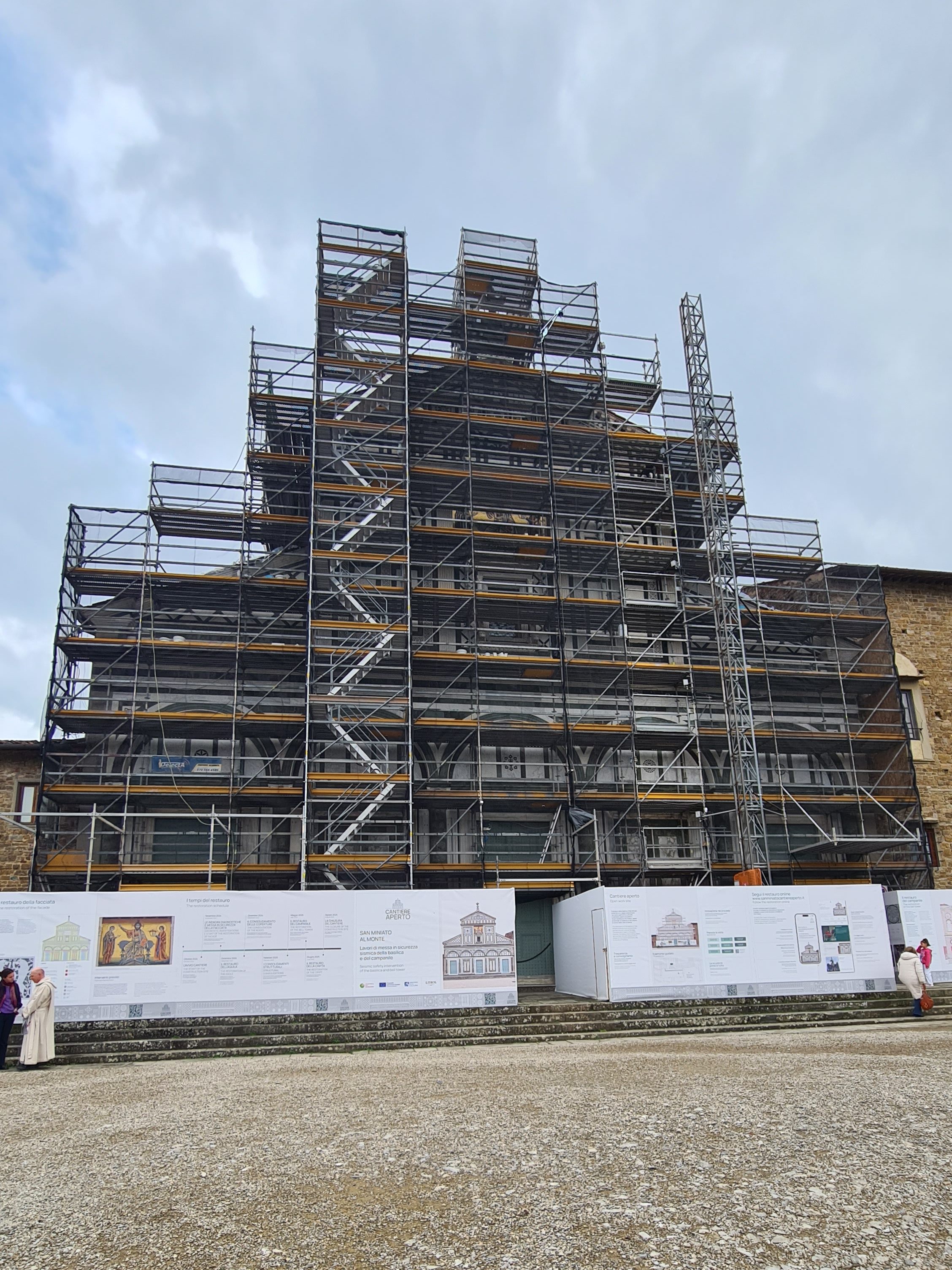
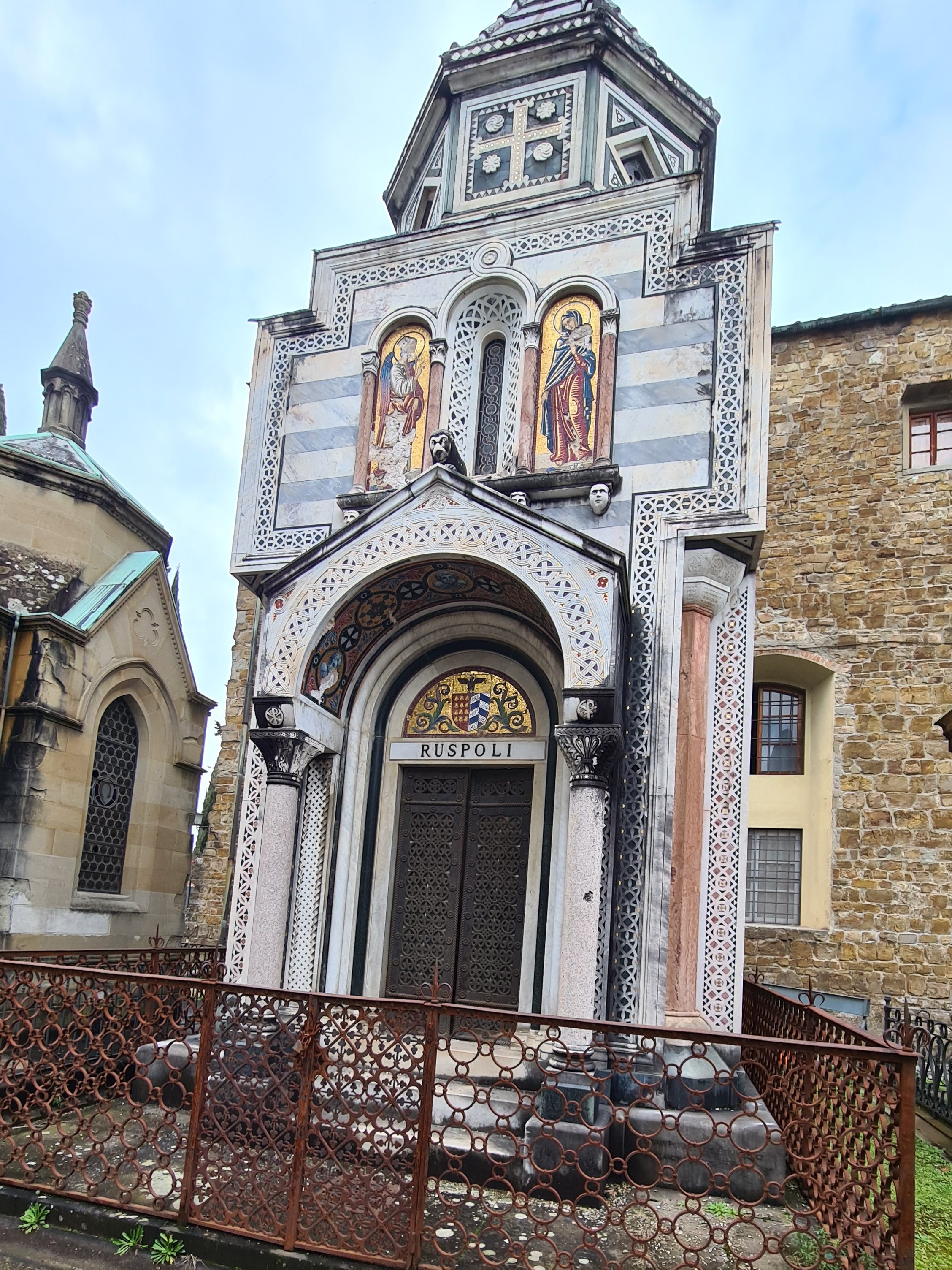
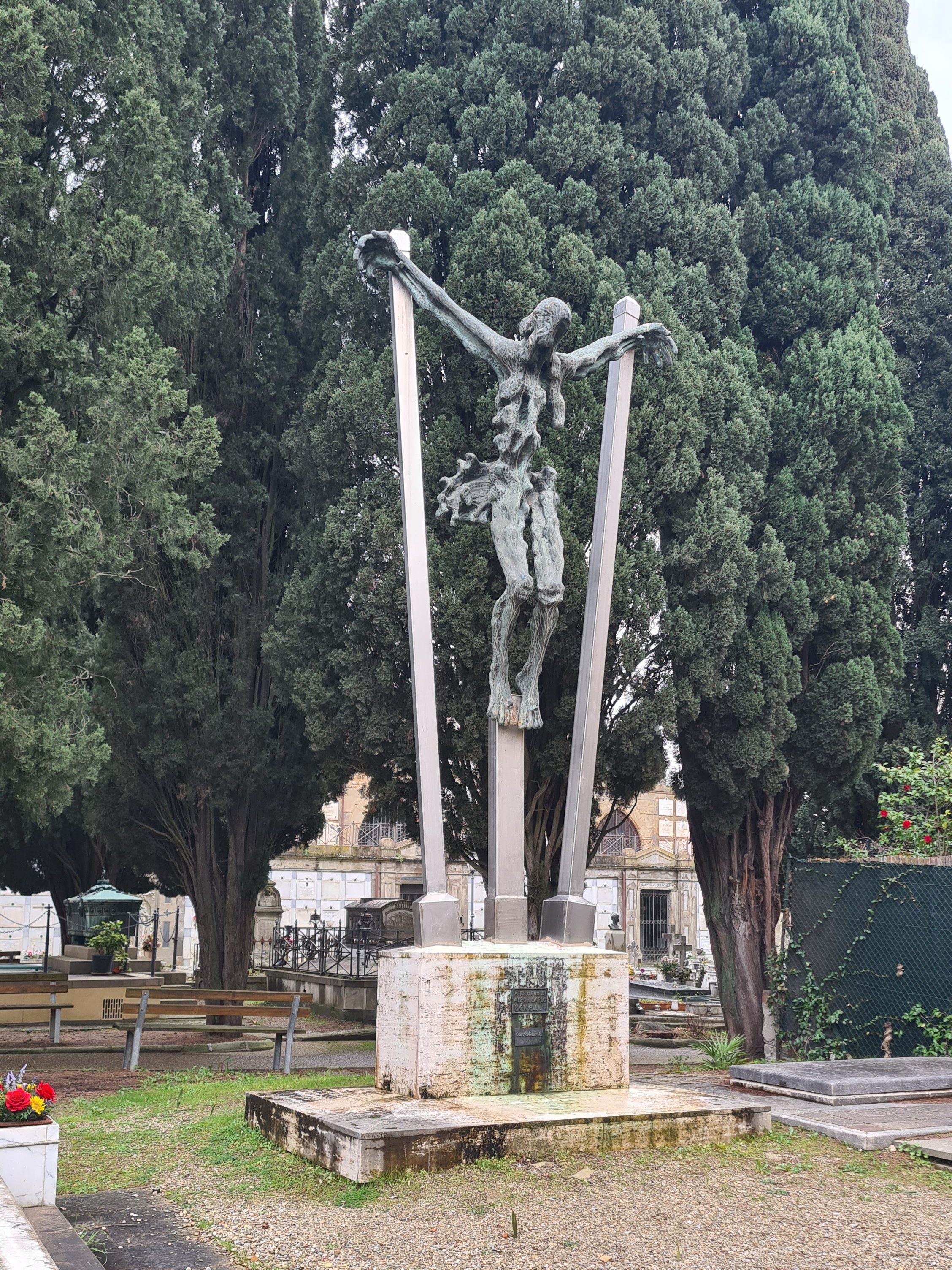
20- San Miniato Al Monte : It is located on a hill with a beautiful view above Michelangelo Square. San Miniato Al Monte means “St. Miniato on the Mountain”. It was built at the highest point of the city. Although it is often mentioned as the place with the most beautiful view of the city, the view of the city is seen very far from there and the photos are as small as a blob. It was dedicated to the Armenian prince Miniato, who was fed to the lions because he was a Christian by the Roman Emperor Decius. When the lions could not tear off his head, the emperor had Miniato beheaded. Later, Miniato was declared a saint and a basilica was built in 1018 where his head was brought. The statues of Jesus and the 12 apostles are among the things to see in the basilica. The mausoleum of Lorenzi, the author of Pinocchio, is here. When we went, the basilica was undergoing renovation. It was impossible to enter inside and its facade was covered with scaffolding. We only visited the cemetery section and I can say that it is worth seeing.
There are links below to my Where to eat in Florence and Visiting Uffizi Gallery and Tuscany Travel blogs
 Gezmek Lazım
“Florence travel” için 2 cevap
[…] Siena Cathedral Siena Cathedral Romus & Romulus and the wolf Sallustio Bandini Torre del Magnia Siena Florence, the capital city of Tuscany […]
BeğenBeğen
[…] Gilli Florence, the capital city of Tuscany Uffizi Gallery, paintings, symbols and stories […]
BeğenBeğen